








It does sometimes feel too stretched out with Kurosawa milking sentimentality out of its melancholy postwar drama, but the compelling characters take us somewhere meaningful as we ponder about what it means to be poor but in love.
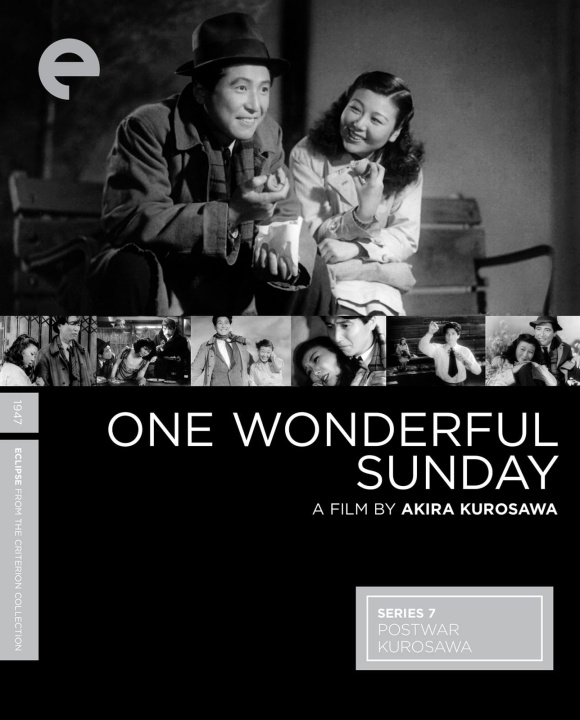
Review #2,679
Dir. Akira Kurosawa
1947 | Japan | Drama, Romance | 109 min | 1.33:1 | Japanese
Not rated – likely to be PG
Cast: Isao Numasaki, Chieko Nakakita, Atsushi Watanabe
Plot: Yuzo and his fiancée, Masako, spend their Sunday afternoon together, trying to have a good time on just thirty-five yen.
Awards: –
Distributor: Toho
Accessibility Index
Subject Matter: Moderate – Optimism vs. Despair
Narrative Style: Straightforward
Pace: Slightly Slow
Audience Type: Slightly Mainstream
Viewed: Criterion Eclipse DVD
Spoilers: No
An early post-war work by Akira Kurosawa, One Wonderful Sunday is uncharacteristically sentimental from a filmmaker who would later be known more for samurai epics and crime noirs.
It is interesting, however, to see the ambitious filmmaker that he would become, as he shows signs of not conforming to conventional storytelling.
Its final act, which I shouldn’t say too much, is an example of Kurosawa pushing the possibilities of cinema, albeit in a more low-key way, but intriguing as an experiment in audience participation as one of the characters breaks the fourth wall to directly elicit a response from viewers.
Apparently, in Japan, this action was a failure, but in France, French audiences responded wilfully. Having said that, One Wonderful Sunday still largely operates classically.
Some critics have described it as ‘Capra-esque’ in its depiction of middle-class despair and acts of individual courage in the face of abjectness.
“We can be like children and forget about the bad stuff.”
An unmarried couple meet for what appears to be their regular Sunday date. Despite being short of money, they try to make the best of their day together, though not without entire scenes of sulking and frustration which Kurosawa stretches out for a tad too long.
It’s postwar and we see Tokyo still in ruins, as orphans run around and businesses exploit their customers. Inflation is sky-high and spirits are unbearably low.
But this couple, wonderfully performed by Isao Numasaki and Chieko Nakakita, find solace in each other as they dream of a better future.
Backed by a score that sometimes appropriates famous excerpts from classical music (a key plot point also makes substantial reference to Schubert’s ‘Unfinished Symphony’), One Wonderful Sunday may rely mostly on sentiment but its compelling characters do take us somewhere meaningful as we ponder about what it means to be poor but in love.
Grade: B
 Eternality Tan