
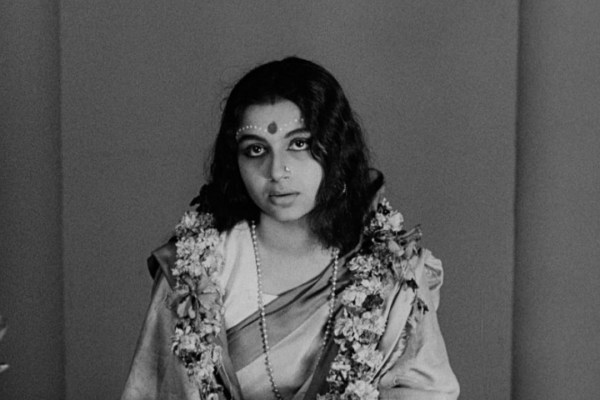

It’s hard to find a debut feature this dreamy and evocative, as Dash lends historical voice to her people—the generations of Gullahs who lived on the South Carolina Sea Islands as they endured slavery and faced a modernising 20th century.

Review #2,660
Dir. Julie Dash
1991 | USA | Drama | 112 min | 1.85:1 | English & French
PG (passed clean)
Cast: Cora Lee Day, Alva Rogers, Barbara O. Jones
Plot: At the dawn of the 20th century, a multi-generational family in the Gullah community on the Sea Islands off of South Carolina struggle to maintain their cultural heritage and folklore while contemplating a migration to the mainland, even further from their roots.
Awards: Won Cinematography Award & Nom. for Grand Jury Prize – Dramatic (Sundance)
International Sales: Cohen Media Group
Accessibility Index
Subject Matter: Moderate – Tradition vs. Progress; Migration; Gullah Community
Narrative Style: Straightforward
Pace: Slightly Slow
Audience Type: Slightly Arthouse
Viewed: MUBI
Spoilers: No
Julie Dash’s first feature, Daughters of the Dust, was one of the most unique films to come out of the early ‘90s American indie cinema period.
One of the key figures of the L.A. Rebellion movement, Dash made use of the cinematic medium to lend historical voice to her people in this dreamy and evocative drama about the Gullahs who lived on the South Carolina Sea Islands away from the mainland.
Apart from the arresting cinematography that bathes almost every scene in a warm sepia-like glow, much like opening an old but pristine family photo album, the one other aspect that immediately hooked me from the get-go was the music, which I would describe as Tangerine Dream-esque but more earthy.
Largely narrated and paced by the rhythms of its score, Daughters of the Dust is first and foremost a memory piece, a tone poem of sorts that reveals the life of the Gullahs at the turn of the 20th century.
“We’ll always live this double life, you know, because we’re from the sea. We came here in chains and we must survive.”
Torn between tradition and progress, the younger folks visit the Islands again to bid farewell to their ancestors while at the same time being reminded of their culture and history by the old guard, including the enduring of slavery by generations before them.
As Dash shows in a series of scenes, they take numerous photos of themselves, one bountiful smile after another, anticipating the bittersweet feeling of opening up their very own photo albums back on the mainland.
While the Daughters of the Dust does feel like an elegy, it is also a spirited celebration of life, spiritual wisdom and the connectedness of family.
A reviewer on MUBI called it a “work of feminist tribalism”, which is an interesting way to describe the film’s progressive ideas on female agency even as age-old rituals (passed down by older women) still maintain their grip on how younger generations of women are asked to think, feel and perform.
Grade: B+
Trailer:
 Eternality Tan
You’re the only other person I know who’s seen that movie. It’s the first full-length movie to be directed by an African-American woman and to use the Gullah language as a major form of dialogue. I had never heard of Daughters of the Dust until a few years ago, and my first experience hearing about the Gullah people was the show Gullah Gullah Island which I saw a few episodes of when I was a little kid, but I never realized how much history there was that I never learned about in school how the Gullah-Geechee had slave rebellions against those who had them in bondage and invented their own language which is an English-based Creole which is why most people can understand various words even without subtitles.
LikeLiked by 1 person
One of my teaching colleagues had mentioned the film many times, so when it became available on MUBI, I knew I had to watch it.
LikeLiked by 1 person
No way! Good on you for checking it out. That’s cool how it’s on MUBI. I should check that site out. I’m glad Daughters of the Dust exists and I wish I knew about this movie when I was younger, and it’s a shame I didn’t know too many Black directors besides Spike Lee at first even when I was in college when I took various film history and production courses.
LikeLiked by 1 person