








It may seem formal and stately in its visual and narrative posturing, but this splendid Merchant-Ivory production achieves a rare sense of intimacy and grace as it tells a story of connections and consternations across different social classes.
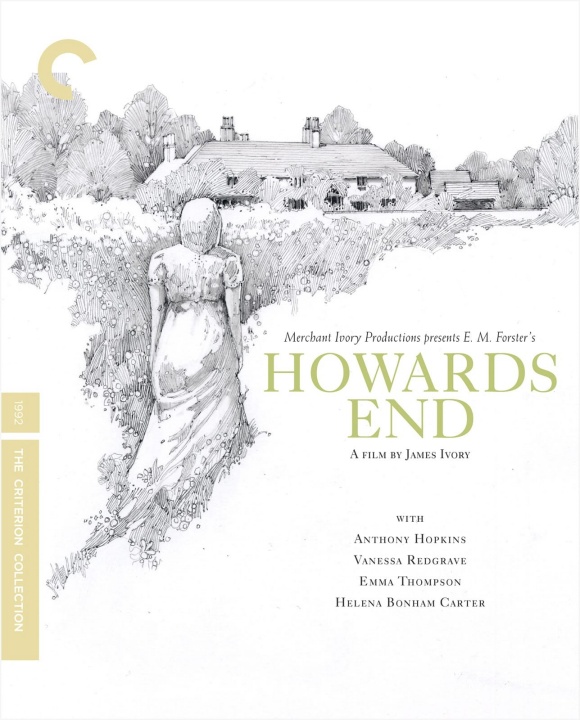
Review #2,597
Dir. James Ivory
1992 | UK | Drama/Romance | 142 min | 2.35:1 | English
PG (passed clean) for mild language, violence and sensuality
Cast: Emma Thompson, Helena Bonham Carter, Anthony Hopkins, Samuel West, Vanessa Redgrave
Plot: A saga of class relations and changing times in an Edwardian England on the brink of modernity, the film centres on liberal Margaret Schlegel, who, along with her sister Helen, becomes involved with two couples: wealthy, conservative industrialist Henry Wilcox and his wife Ruth, and the downwardly mobile working-class Leonard Bast and his mistress Jackie.
Awards: Won 3 Oscars – Best Leading Actress, Best Adapted Screenplay, Best Art Direction-Set Decoration; Nom. for 6 Oscars – Best Picture, Best Director, Best Supporting Actress, Best Cinematography, Best Costume Design, Best Original Score; Won 45th Anniversary Prize & Nom. for Palme d’Or (Cannes)
Distributor: Cohen Media Group
Accessibility Index
Subject Matter: Moderate – Class Relations; Rich vs. Poor
Narrative Style: Slightly Complex
Pace: Slightly Slow
Audience Type: Slightly Mainstream
Viewed: MUBI
Spoilers: No
Often regarded as the finest of all Merchant-Ivory productions, Howards End was the winner of three Oscars, including one for Emma Thompson for Best Lead Actress.
She plays Margaret Schlegel who is the center of a narrative that contains an assortment of characters who would cross each other’s path in significant ways.
Anthony Hopkins, Helena Bonham Carter, Vanessa Redgrave and more make up the ensemble cast that would represent the three broad social classes in Britain in the early 1910s.
We have, on one hand, the Wilcoxes (as led by Hopkins) who are a family of ultra-rich capitalists, and on the other hand, the Basts, who are poor and struggling (and at times, even starving).
The Schlegels, neither supremely wealthy nor debilitatingly poor, are the highly-cultured and intelligent middle class who enjoy the pursuits of art and literature.
“Don’t take up a sentimental attitude over the poor… The poor are poor. One is sorry for them, but there it is.”
Howards End (its name a reference to an old, unused house that the Wilcoxes possess) brings these three classes together in a story about connections and consternations, as well as compassion and prejudice.
Director James Ivory takes his time to develop the beats of the story—it is an unrushed film that relies a fair bit on its visual posturing, where a sense of formality and stateliness is evident but not overpowering.
For instance, its production design, costumes and even the ‘manners’ of the characters all contribute to the film’s ‘prim and proper’ vibe. Even the Basts find the requisite dignity in the face of economic discrimination.
There is no cold veneer to peel away in Howards End, only the warm intimacy and grace that deserves amplification, no matter how injurious things might become.
Grade: A-
Trailer:
Music:
 Eternality Tan