
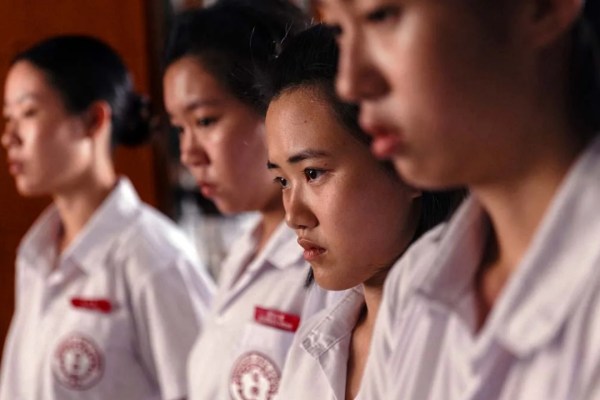







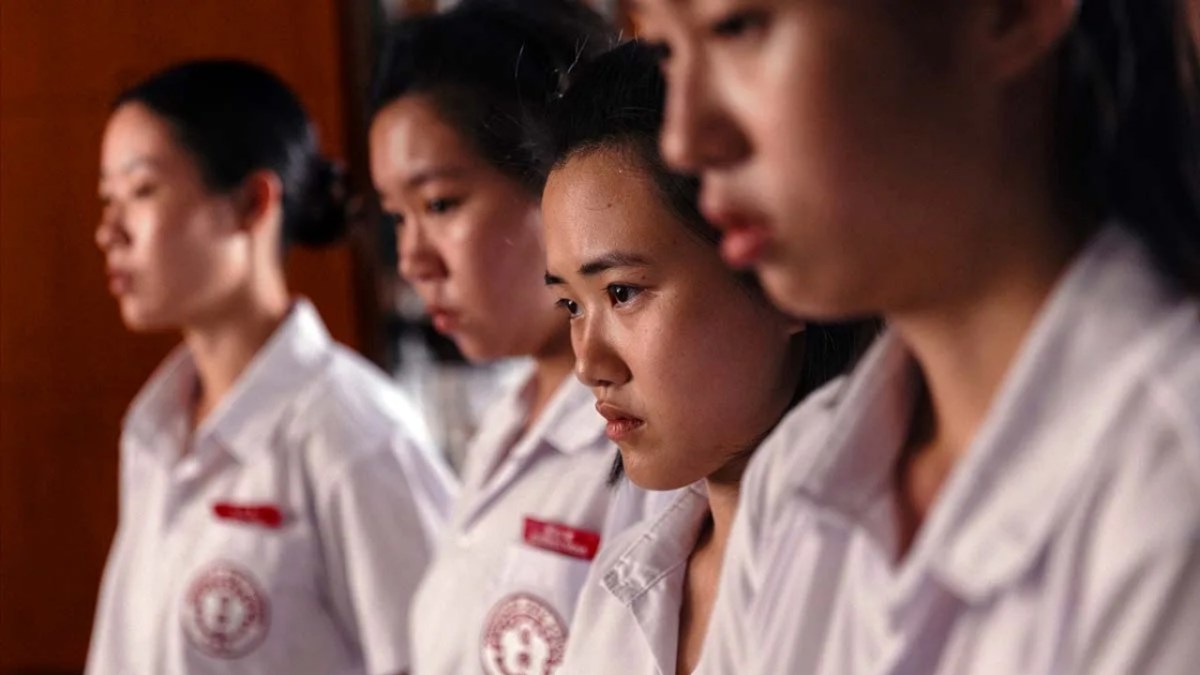
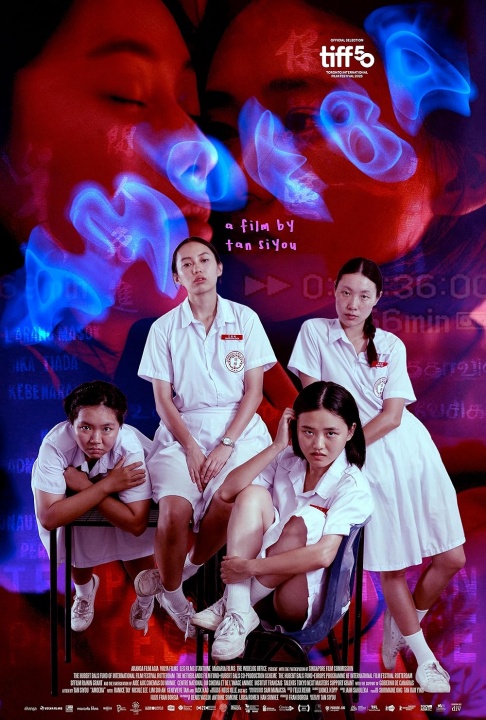
Four gangsta-wannabe schoolgirls navigate friendship, school rules and academic expectations in Tan Siyou’s fantastic debut feature, an emotionally resonating work about the codification of teenage identity and destiny in conformist Singapore.
Review #3,072
Dir. Tan Siyou
2025 | Singapore | Drama | 99min | 1.85:1 | English & Mandarin
R21 (passed clean) for mature content
Cast: Ranice Tay, Nicole Lee Wen, Lim Shi-An, Genevieve Tan, Jack Kao
Plot: In a repressive city-state, a tomboy schoolgirl persuades three classmates at an all-girls school to rebel by forming a triad gang.
Awards: Won FIPRESCI Prize, Taiwan Film Critics Society Award & Nom. for Best New Director (Golden Horse Awards)
International Sales: Diversion (SG: Anticipate Pictures)
Accessibility Index
Subject Matter: Moderate – School Life; Gangsterism; Youth Rebels; Identity & Destiny
Narrative Style: Straightforward
Pace: Normal
Audience Type: Slightly Arthouse
Viewed: Filmhouse
Spoilers: No
I’ve been waiting for a film like this from a Singaporean filmmaker since Confucius knows when. With Amoeba, her first feature, Tan Siyou more than brandishes a blade of immortality for her quartet of riotous schoolgirls, whose names may soon be permanently etched in the minds of Singaporean cinephiles who had survived those surreal years in secondary school.
Choo Xinyu, Vanessa Scarlett Ooi, Sofia Tay and Gina Wong, as played with infectious charm by Ranice Tay, Nicole Lee Wen, Lim Shi-An and Genevieve Tan, respectively, are the country’s Mount Rushmore of rebel students, though they might have a competitive fistfight in their hands if they wish to oust those ‘ungovernables’ from Tzang Merwyn Tong’s Faeryville (2014).
Amoeba is at once a time capsule and a fantasy, a ‘what-if’ time travel movie that takes us back to the 2000s, when the digital camcorder was the new tech toy—and for Siyou, an aesthetical choice of grounding for her narrative that nostalgically yearns for a kind of neo-indexical realism that feels deeply missed.
Those days of transition from film to digital mirror the trajectories of our gangsta-wannabe anti-heroes—their playful, organic ‘chemistry’ gradually refracted into something more coded, like a Matrix-esque world of 1s and 0s, where numbers define what you are and your destiny.
“I think being the class monitor is a shameful thing because you are just the teachers’ servant.”
In fact, what better scene to latently express this than in the disquieting in medias res prologue: we see the camera’s point-of-view as Vanessa shoots in the dark in Xinyu’s room, as the latter lies still in her bed, hoping to bait and digitally trap that elusive spectre that Xinyu claims to be haunting her.
What is that panoptic ghost that Xinyu can’t seem to shake off—is it (a) the burden of adult expectations; (b) the horror of conformity and model answers; or (c) the school as a microcosm of the surveillance state? Maybe the ‘right’ answer is (d) all of the above. Or perhaps what we really need isn’t fixed answers but a creative, open-ended response, as paved with unreserved clarity by Siyou’s work.
Engaging from moment to moment, and emotionally resonating in ways I haven’t felt for quite some time for a Singaporean film, Amoeba is a new favourite after Anthony Chen’s Ilo Ilo (2013) and Eva Tang’s The Songs We Sang (2015).
I was a goody-two-shoes class monitor in secondary school for two years; thanks Siyou, for letting me dream a little bigger and a little snarkier. As the title ‘A-MOE-BA’ might be slyly deconstructed, weren’t most of us like devout sheep that followed the Ministry of Education to the ends of our highly-conditioned single-cell brain?
Grade: A-
Trailer:
 Eternality Tan