



A provincial man who’s trying to find a job stays with his city cousin in Ceylan’s masterful third feature that probes issues of personal stasis and social alienation in contemporary Turkish society, marked by restrained performances that accrue a quiet emotional depth.
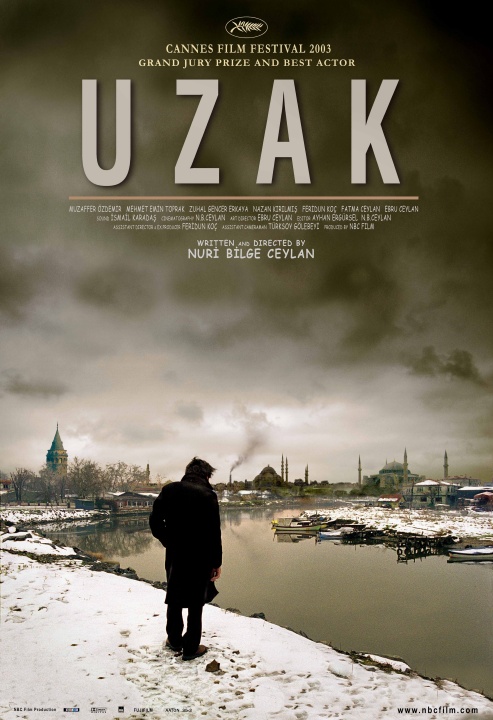
Review #3,058
Dir. Nuri Bilge Ceylan
2002 | Turkey | Drama | 106min | 1.85:1 | Turkish
NC16 (passed clean) for some sexual imagery
Cast: Muzaffer Ozdemir, Mehmet Emin Toprak, Zuhal Gencer
Plot: A young man from rural Turkey arrives in Istanbul with dreams of working on a ship and stays with a cousin while he searches for work. Over time, the former’s struggles to find employment and the latter’s troubles and disappointments strain their relationship and living situation.
Awards: Won Grand Jury Prize & Best Actor (Cannes)
International Sales: NBC Film
Accessibility Index
Subject Matter: Moderate – Rural vs. Urban; Personal Stasis; Social Alienation
Narrative Style: Slightly Complex
Pace: Slow
Audience Type: Arthouse
Viewed: Screener
Spoilers: No
The third feature of Nuri Bilge Ceylan’s loose ‘Provincial’ trilogy was marked by the tragic death of one of the director’s key actors from his early filmography—Mehmet Emin Toprak (also a cousin of the director), who died in a car crash at age 28.
He was posthumously awarded the Cannes Best Actor prize, which he shared with co-star Muzaffer Ozdemir. Both give restrained performances that accrue great emotional depth, the kind that is not immediately apparent (and thus can’t be vicariously experienced), but slowly and quietly embeds itself in the faces of the actors.
With Distant, Ceylan’s poetic and unobstrusive style reaches an early zenith that he would continue to shape and experiment further with Climates (2006) and Three Monkeys (2008), before transitioning into more ‘epic’ and talky dramas in the 2010s.
Toprak plays Yusuf, a broke man who leaves his village to find a job in the city, temporarily sheltering at his cousin Mahmut’s (Ozdemir) middle-class home (incidentally, it’s Ceylan’s home). Mahmut, a photographer just like Ceylan, even drives the director’s car, more than affirming the notion that the protagonist is the director’s surrogate.
“Forget it while you’re still ahead. It’s an empty dream.”
As the title suggests, there is a pronounced sense of distance between these two relatives—they can’t seem to have a proper conversation without quickly becoming a nuisance to one another. There is also a socially unacceptable ‘distance’ in each character’s engagement (or lack thereof) with women, condemned to a fate of erotic contemplation or transactional bonding.
Toprak doesn’t know how to approach city women with small-talk, coming off as ‘stalkerish’ (coincidentally, Mahmut is a fan of Tarkovsky, and we see him watching a VHS tape of Stalker); Mahmut, on the other hand, is divorced, leading a lonely existence marked by the occasional visit from a prostitute.
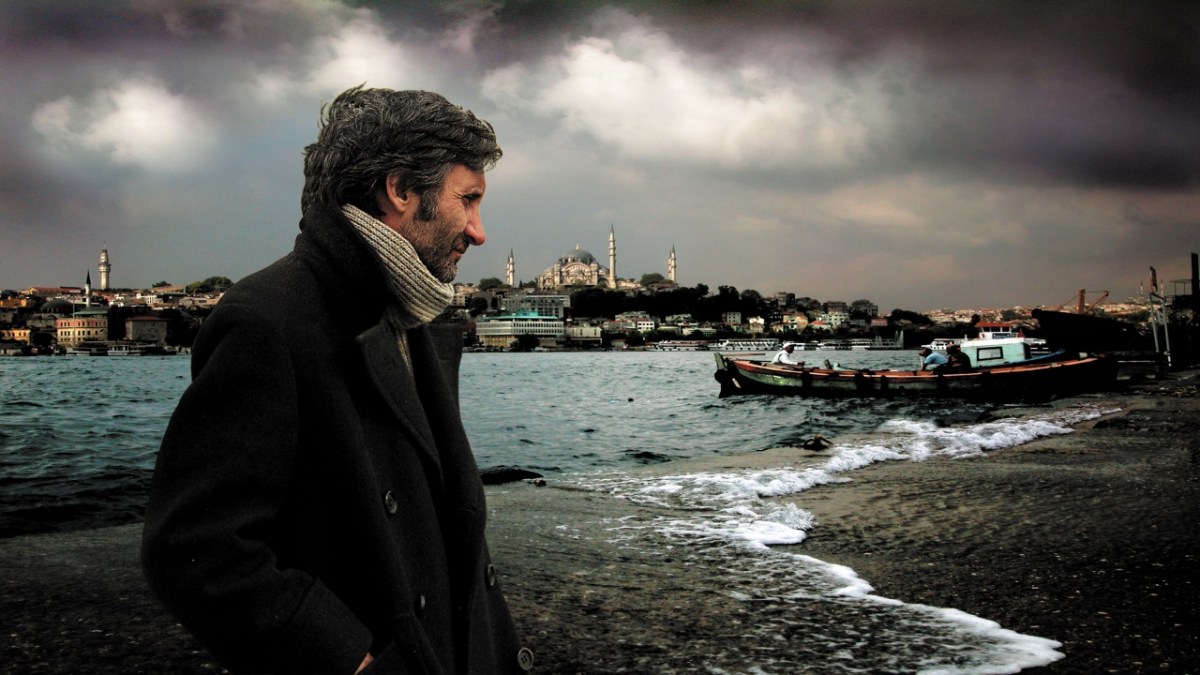
Distant is, however, more Antonioni than Tarkovsky in its treatment of contemporary alienation, most tellingly in what seems like an indirect homage shot to Red Desert (1964)—that of a capsized freighter in a heavily snowing harbour. This extraordinary image, among many other stunning landscape shots, perhaps best symbolises Toprak and Mahmut’s stasis in life.
The masterstroke of Ceylan lies in how he’s able to have both of them understand each other implicitly and give the other ‘space’ or ‘distance’—only when someone is far away can one feel the deepest form of despair needed for a possible shot at transformative healing.
Grade: A-
Trailer:
Promo Clip:
 Eternality Tan