





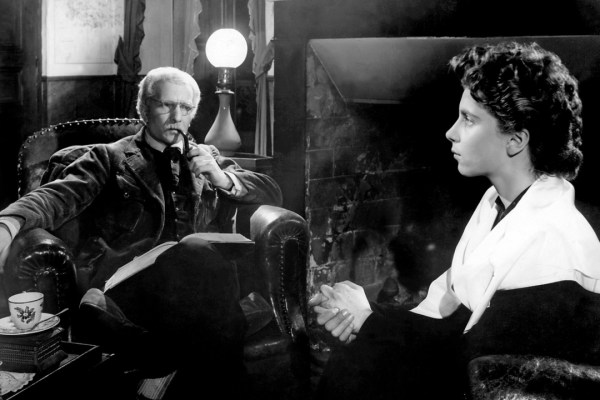

Shot in solemn black-and-white, Hong’s elegiac, non-linear reflection on infidelity, regret and emotional burden sees a condemned man trying to move on from his extramarital affair.
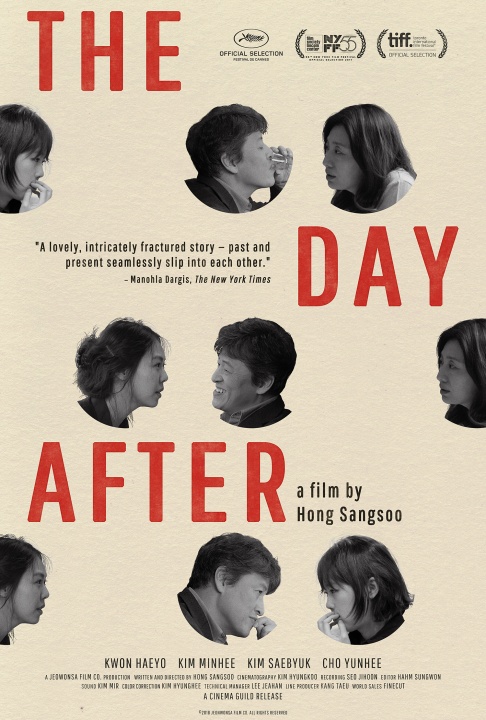
Review #3,027
Dir. Hong Sang-soo
2017 | South Korea | Drama, Romance | 92min | 1.90:1 | Korean
PG (passed clean)
Cast: Kwon Hae-hyo, Kim Min-hee, Kim Sae-byuk, Cho Yun-hee, Gi Ju-bong
Plot: On her first day at work, Areum replaces a woman who broke up with the boss. The wife of the boss finds a love note, bursts into the office, and mistakes Areum for the other woman.
Awards: Nom. for Palme d’Or (Cannes)
International Sales: Finecut
Accessibility Index
Subject Matter: Moderate – Extramarital Affair; Mistaken Identity
Narrative Style: Slightly Complex
Pace: Slightly Slow
Audience Type: Slightly Arthouse
Viewed: Oldham Theatre (as part of Asian Film Archive’s ‘Twin Tales: Eric Rohmer x Hong Sang-soo’ programme)
Spoilers: No
Any Hong Sang-soo biographer would note that 2017 was a watershed year in the director’s admirable productivity.
Hong directed three features, two of which (The Day After and Claire’s Camera) world premiered at the Cannes Film Festival, with one in contention for the Palme d’Or. A few months earlier, On the Beach at Night Alone won Best Actress at the Berlinale for Kim Min-hee.
Kim finds herself in the middle of an unfortunate case of mistaken identity when her character, Ah-reum, on the first day of work as an assistant in a boutique publishing house, is physically assaulted by an older woman.
That lady, the boss’ wife, has long suspected her husband’s infidelity, which is true, but the culprit in question is no longer working there.
Amid the real-life extramarital affair Hong has had with Kim since 2015, The Day After, like Beach, is a reflective piece on how it feels to be a condemned man stuck in a quagmire.
“You are seeing someone, right?”
The professional and the personal intertwine, but it is the psychological weight of burden that consigns the boss, Bong-wan, to some kind of emotional hellhole. In fact, Hong’s regular, Kwon Hae-hyo, is arguably at his most vulnerable here, with more than one ugly-crying scene.
In black-and-white, everything feels more solemn, and the film’s tone remains elegiac till the very end. Marriage seems to be a curse for folks who fall out of love or can’t find any thrill in the inevitable mundanity of simply existing.
Hong, however, doesn’t treat The Day After as a simple narrative—its non-linear style dovetails past and present through effortless match cuts, triggering not just illicit memories of places and relationships, but also amnesia.
When there is no way out, to be able to forget, intentionally or otherwise, is the wild card that life offers to anyone willing to move on.
Grade: B+
Trailer:
 Eternality Tan
[…] Day After, The (2017) […]
LikeLike