






Half-baked with its ideas, Sorrentino’s polished and aesthetically pleasing anti-myth can’t seem to find a compelling story out of the ‘mythology’ of Parthenope, as a young woman pursues intellectualism instead of leveraging on her seductive beauty.
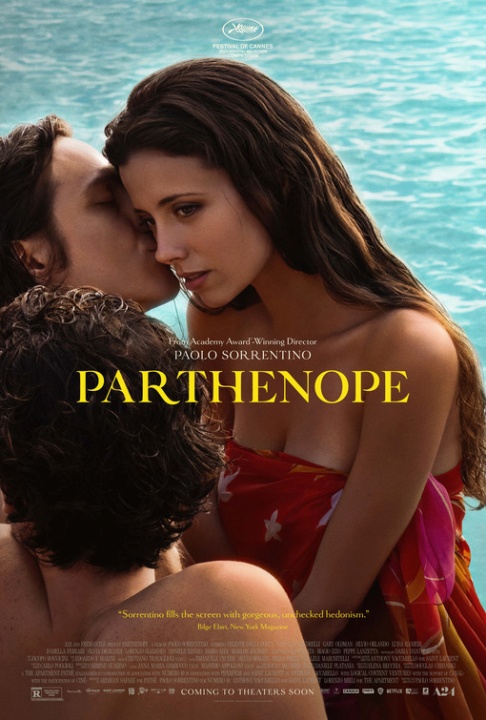
Review #3,001
Dir. Paolo Sorrentino
2024 | Italy | Drama | 137min | 2.39:1 | Italian, Neopolitan & English
R21 (passed clean) for strong sexual content/graphic nudity, and language
Cast: Celeste Dalla Porta, Stefania Sandrelli, Gary Oldman, Silvio Orlando, Luisa Ranieri
Plot: A woman born in the sea of Naples in 1950 searches for happiness over the long summers of her youth, falling in love with her home city and its many memorable characters.
Awards: Nom. for Palme d’Or (Cannes)
International Sales: Pathe
Accessibility Index
Subject Matter: Moderate – Mythology; Naples; Woman’s Beauty; Intelligence
Narrative Style: Slightly Complex
Pace: Slightly Slow
Audience Type: Slightly Arthouse
Viewed: Screener
Spoilers: No
Some might say Parthenope is The Great Beauty-lite, and in a way, it is true for those, like myself, who remain rather unconvinced by the Italian auteur’s new work.
Paolo Sorrentino is a name that conjures up the promise of stylish, fascinating, thematically complex, and at times, flashy and indulgent filmmaking. He is one of the best working directors in Europe, but unfortunately, Parthenope is that rare weak link in his illustrious filmography.
Part of the problem is that underneath the polished gleam of arresting visuals, the breathtaking landscape of Naples (an aesthetic continuation of his previous feature, The Hand of God), and truckloads of male gazey shots, Sorrentino can’t seem to find a compelling story out of his titular character.
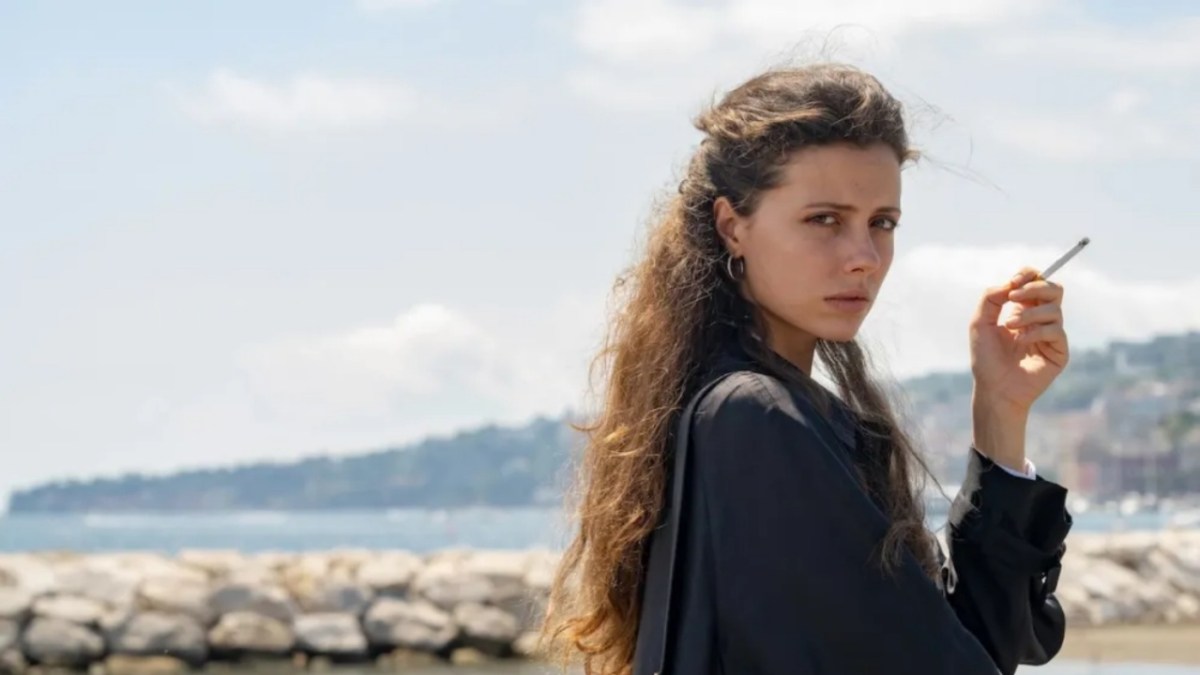
Played by Celeste Dalla Porta in her first lead role in a feature film, Parthenope’s life is charted over the decades as she aspires to a career in academia as an anthropologist.
However, being drop-dead gorgeous by anyone’s standards, she could have had a different life, where her seductive beauty opens the right doors to a career of fame—or the wrong doors to opportunistic exploitation by others.
“Have you noticed how young people always opt shamelessly for despair?”
Sorrentino is interested in why a young and attractive woman like Parthenope doesn’t take advantage of her ‘great beauty’, but pursues a more uneventful life of intellectualism instead, which, if we may be honest, is also life’s other ‘great beauty’, the pursuit of existential and philosophical nourishment.
Thus, Parthenope, in sometimes meandering ways, shows us the conscious effort of a woman who recognises her strong sex appeal but is determined not to succumb to or wield it for gains that may eventually destroy her.
Ultimately, the film is half-baked with its ideas, though some may find Sorrentino’s contestation of mythology interesting. Parthenope, in the Greek legend, failed to seduce Odysseus and thus drowned herself in the sea out of despair. Her body would be washed ashore, where Naples now stands.
Sorrentino’s work is an anti-myth, where destiny isn’t pre-determined. Maybe that’s why he has Gary Oldman in a peculiar cameo as an old, world-weary writer who laments not just the loss of (his) youth, but lambasts youths for their despair, something that Parthenope here doesn’t fatefully succumb to.
Grade: B-
Trailer:
Music:
 Eternality Tan