








Backed by a sublime piano score by Ryuichi Sakamoto, this Murakami adaptation about an older man with chronic loneliness and his fashion-obsessed wife lulls viewers into a quiet trance.

Review #2,956
Dir. Jun Ichikawa
2004 | Japan | Drama | 77min | 1.85:1 | Japanese
PG (passed clean)
Cast: Issey Ogata, Rie Miyazawa
Plot: A reclusive illustrator falls in love with a young woman who addictively shops for clothing.
Awards: Won Special Jury Prize & FIPRESCI Prize (Locarno); Nom. for Grand Jury Prize – World Cinema Dramatic (Sundance)
International Sales: Celluloid Dreams
Accessibility Index
Subject Matter: Obsession; Fashion; Loneliness
Narrative Style: Straightforward
Pace: Slightly Slow
Audience Type: Slightly Arthouse
Viewed: Oldham Theatre (as part of Asian Film Archive’s ‘Styled & Sutured: Fashion on Screen’ programme)
Spoilers: No
A somewhat difficult film to pigeonhole, Tony Takitani could be Jun Ichikawa’s best-known work, perhaps partly because it was scored by Ryuichi Sakamoto, who is at his sublime best with his subtle pitter-patter ways with the piano.
Well, at least for me, I had listened to the music long before I had the chance to see the film, particularly the elegiac track, ‘Solitude’, which is one of my favourites of his.
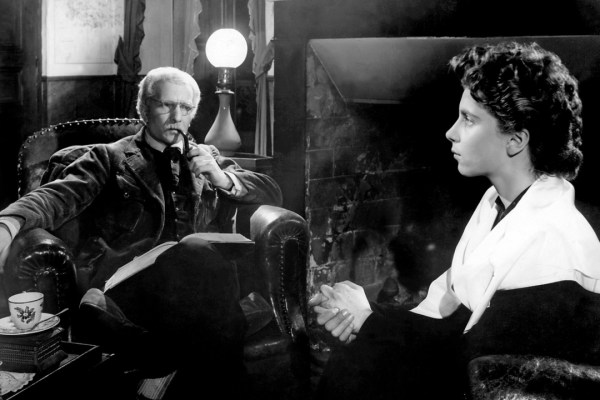
In less than 80 minutes, Tony Takitani, an adaptation of Haruki Murakami’s 1996 book, tells us the story of Tony (Issei Ogata), an older man who finally overcomes chronic loneliness when he asks a younger woman to be his wife.
They love each other but there is a huge problem: his wife is obsessed with fashion and spends truckloads of money on hundreds of clothes and shoes.
I hardly have any interest in fashion, so I don’t quite understand how anyone can spend so much on things that he or she will probably wear once or twice in his or her life.
“She was like a bird taking flight for a distant land…”
(But then again, some of my friends can’t quite wrap around their heads why in the abundant age of streaming I still continue to add Criterion Blu-rays to my 700-strong collection, most of which I might indeed only watch once or twice in my life.)
Maybe by that logic, I could will myself to resonate with Ichikawa’s film—this idea of personal obsession over possessing something beautiful and valuable.
However, such is the director’s filmmaking style, one marked by wall-to-wall music from Sakamoto (some might find it way too repetitive and hence losing its emotionality) and a heavy reliance on narration, that it lulls viewers into a quiet, sleep-inducing trance.
The visual language is also repetitive (or perhaps for some, hypnotic), mostly tracking from left to right in numerous interior scenes.
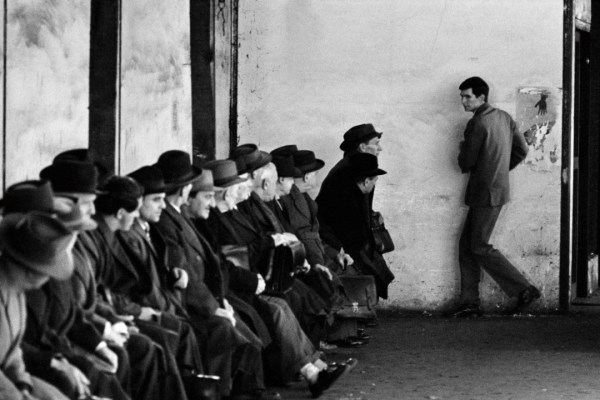
However, the use of photo montages in certain segments, particularly the prologue about Tony’s father, imbues Tony Takitani with a light touch of experimental filmmaking that caressingly invites us into its world.
Grade: B
Trailer:
Music:
 Eternality Tan