








A lesser effort by Lang as his Hitchcockian-lite crime noir sees a writer who had inadvertently killed his maid trying to implicate his brother in the covering up of the murder.
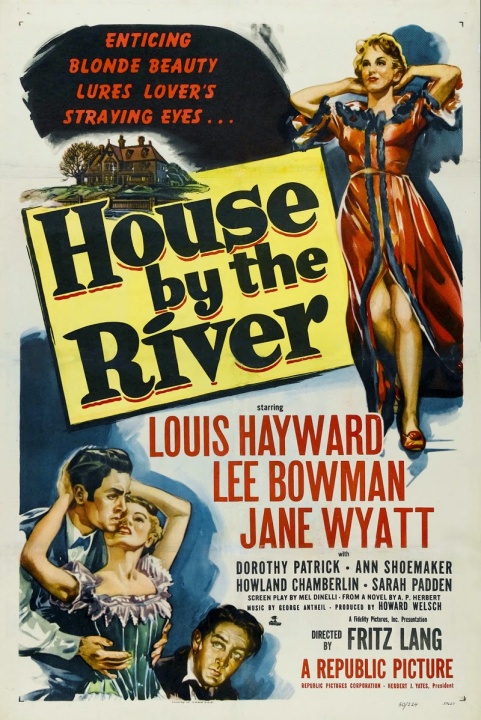
Review #2,949
Dir. Fritz Lang
1950 | USA | Drama, Crime | 85min | 1.33:1 | English
Not rated – likely to be PG13 for some disturbing scenes
Cast: Louis Hayward, Jane Wyatt, Lee Bowman
Plot: A deranged writer murders a maid after she resists his advances. The writer engages his brother’s help in hiding the body, causing unexpected problems for both of them.
Awards: –
Source: Films sans Frontières
Accessibility Index
Subject Matter: Covering Up of Crime; Unintended Consequences; Writing
Narrative Style: Straightforward
Pace: Slightly Slow
Audience Type: Slightly Mainstream
Viewed: MUBI
Spoilers: No
A lesser later career effort in Fritz Lang’s filmography, House by the River should still interest Classical Hollywood fans who are into crime noirs with a Hitchcockian tinge.
One of the key figures of German Expressionism whose films like Metropolis (1927) and M (1931) remain cornerstones of that bygone era, Lang would imbue shades of shadowy, some might even say, gothic filmmaking in this straightforward case of unintended murder.
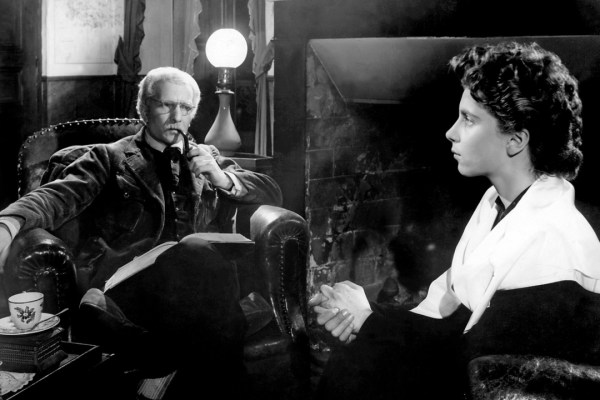
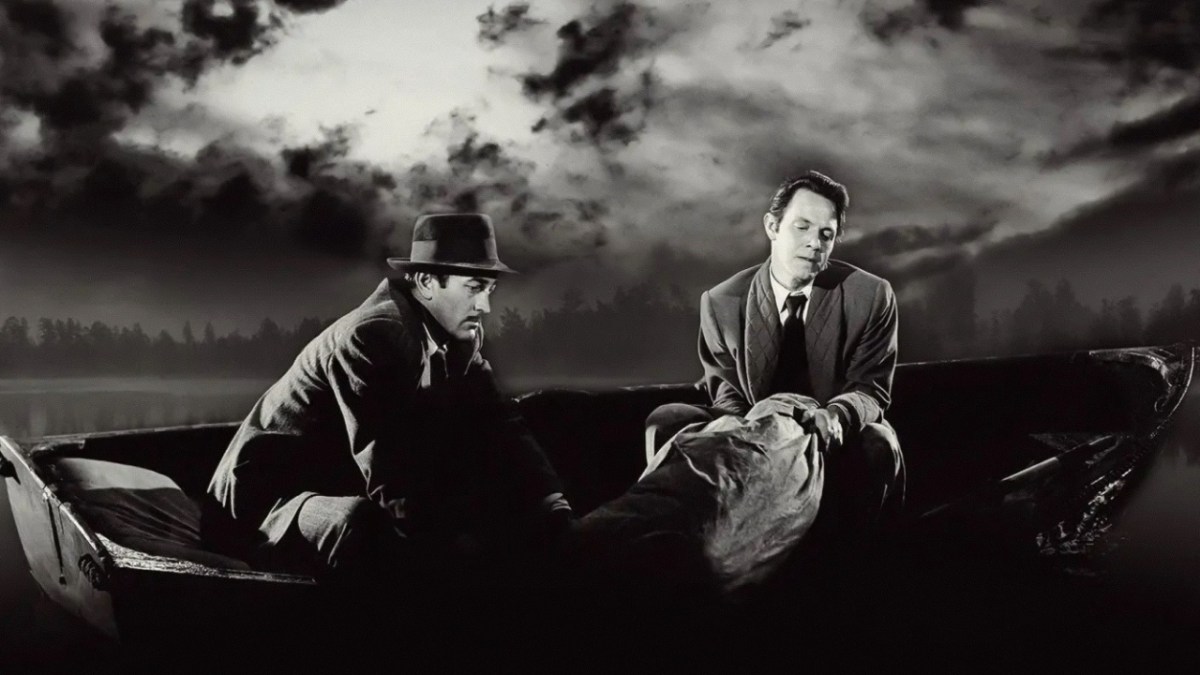
Stephen is a writer who attempts to seduce his maid but inadvertently strangles her to death. With her motionless body lying in his house, Stephen’s brother, John, pays him a visit. What bad timing!
Exploiting his brother’s shaky reluctance to assist him, Stephen tries to find a way out by making John a suspect, whom he has disliked for years. What a bad brother!
“But they will never believe me. Even you don’t believe me.”
While House by the River is efficiently told from a plotting aspect, Lang is more interested in Stephen’s state of mind.
In several moments where psychological guilt rears its ugly head, we see Stephen triggered by light reflecting off a fish jumping out of the water, as well as hallucinations of the dead. Although infrequent, the use of such ‘visual flourishes’ does add to the overall dark mood.
Lang also explores the ‘personal’ nature of writing, as Stephen, who has faced several professional setbacks, decides to write about a murder mystery that he knows only too intimately. Ultimately, there isn’t quite enough going on in House by the River that really brings the intrigue and deception to a high level.
For as long as possible, Lang relies on the naturally antagonistic relationship between the two siblings to create narrative momentum. I daresay this aspect is more interesting than the covering up of the murder.
Grade: B-
Trailer:
 Eternality Tan