







A mix of avant-garde Godard and topographical Rivette, but wholly Oshima in this occasionally ponderous meta-filmic and self-reflexive take on what it means to engage politically with filmmaking as a character leaves a mysterious final reel of film after committing suicide.

Review #2,921
Dir. Nagisa Oshima
1970 | Japan | Drama, Mystery | 94min | 1.33:1 | Japanese
R21 (passed clean) for sexual scenes and nudity
Cast: Tomoyo Oshima, Naomi Shiraishi, Kenji Shiiya
Plot: This circuitous film begins with the alleged suicide of a young activist who is part of a radical film collective. When his camera is recovered by a friend, Motoki, it appears that nothing significant has been shot.
Awards: Official Selection – Directors’ Fortnight (Cannes)
Source: Carlotta Films
Accessibility Index
Subject Matter: Moderate – Political Activism; Filmmaking
Narrative Style: Complex
Pace: Slightly Slow
Audience Type: General Arthouse
Viewed: Oldham Theatre (as part of the Singapore International Film Festival)
Spoilers: No
A fantastic 4K restoration was presented at the Singapore International Film Festival but unfortunately, the film left me cold even if it got me thinking about things. It’s one of those pictures that work the mind rather than the heart.
It is also more avant-garde in nature, reminding of later-day Jean-Luc Godard according to some critics, but somehow I thought of Jacques Rivette whilst seeing it.
You see, The Man Who Left His Will on Film, is not just about (literally) a dead man with a camera in hand, it is also about topography.
As the characters are left with a final reel of film by a comrade who commits suicide in the opening scene, the reel itself doesn’t seem to contain anything of note, let alone a last desperate political cry.
Made a couple of years after the 1968 student protests, director Nagisa Oshima adopts a self-reflexive mode, deconstructing that reel by having his ‘stand-in’ character, Shoichi, shoot what is ‘missing’ in the frame.
“There is no meaning in the image.”
Working within its circular meta-filmic structure, Oshima’s work may not consistently engage with its first half seemingly going nowhere meaningful; the later half is a different animal altogether, and that’s where the Rivette association crept into my mind.
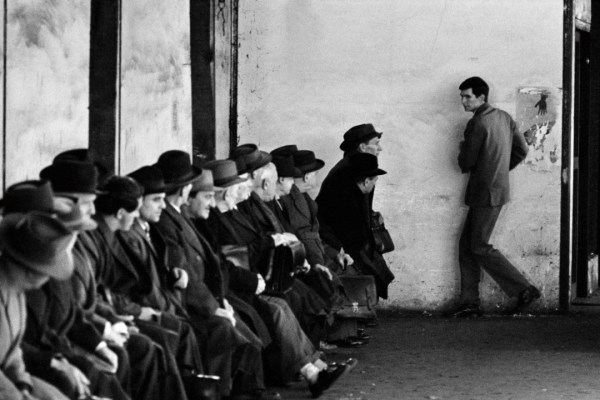
Like the French auteur’s Le Pont du Nord (1981), or even the disappointing Merry-Go-Round (1980), topography is a critical narrative device, where characters move around a locale, often meanderingly and repetitively if also freewheelingly, to find themselves.
Oshima’s film works similarly, only that the politics of the image and the filmmaker’s agency become embedded in the fabric of the landscape.
What’s visible or invisible, with or without the camera, with or without intervention, continues to haunt the places of trauma. Even the naked body isn’t free from trauma-mapping as that mysterious reel of film is projected onto a woman’s flesh in one of those semi-erotic scenes that Oshima was known for.
While I couldn’t get on board with The Man Who Left His Will on Film completely, I’m nevertheless grateful for the opportunity to see it.
Grade: B-
Music:
 Eternality Tan
[…] his later The Man Who Left His Will on Film (1970), which was similarly avant-garde, Death by Hanging sure left me puzzled—but […]
LikeLike