

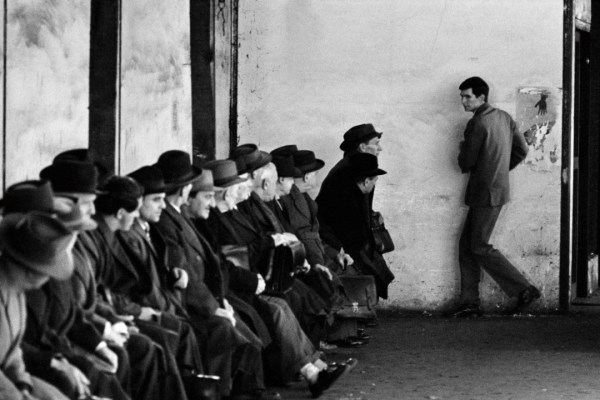

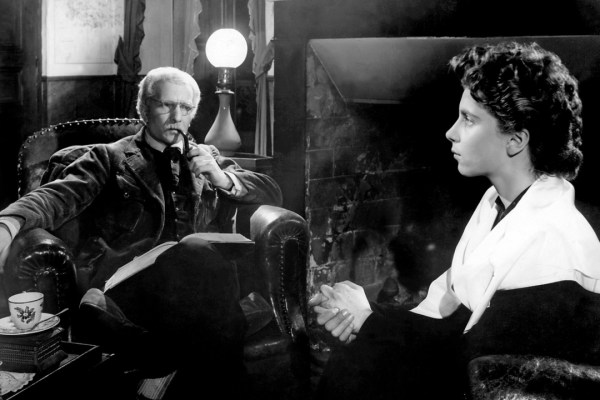







Michel Piccoli and Anouk Aimee deliver Cannes award-winning performances in one of Bellocchio’s finest films, as severe psychological problems afflict a brother and sister who detest but need each other.
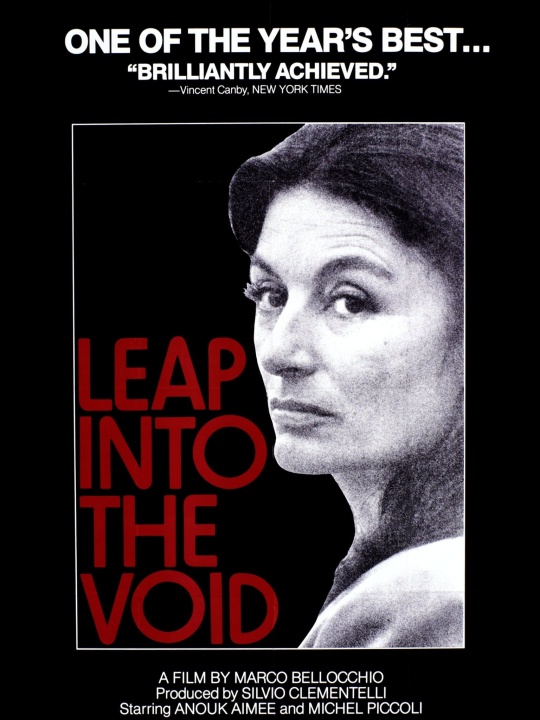
Review #2,909
Dir. Marco Bellocchio
1980 | Italy | Drama | 120min | 1.85:1 | Italian
Not rated – likely to be M18 for nudity and coarse language
Cast: Michel Piccoli, Anouk Aimee, Michele Placido
Plot: A judge’s depressed sister improves after meeting a charismatic actor with a shady past. As their relationship blossoms, the judge grows jealous and attempts to use his position to intervene.
Awards: Won Best Actor, Best Actress & Nom. for Palme d’Or (Cannes)
International Sales: MK2
Accessibility Index
Subject Matter: Moderate – Psychological Issues; Childhood Trauma; Sibling Relationship
Narrative Style: Slightly Complex
Pace: Slightly Slow
Audience Type: Slightly Arthouse
Viewed: MUBI
Spoilers: No
This has got to be one of Michel Piccoli’s finest performances. He plays Mauro, a judge whose flustered life revolves around taking care of his older sister, Marta (Anouk Aimee), who is suffering from a severe bout of mental issues. Both won Best Actor and Best Actress respectively at the Cannes Film Festival.
The tremendous performances aside, Leap Into the Void calls to attention the sometimes underappreciated Italian auteur Marco Bellocchio’s skill in crafting works that go deep into the psychology of his characters.
Here, the supposedly moral judge faces mental problems of his own when he becomes debilitatingly jealous of Marta’s newfound relationship with a lawless theatre actor, whom Mauro ironically had introduced to help Marta improve her condition.
Bellocchio deftly alternates between past and present, showing the trauma of Mauro and Marta’s childhood as caused by their violent and unstable father.
“I make a lot of people disappear. It’s my defence mechanism against life.”
This interplay of family dynamics as shaped by the passage of time is one of the director’s usual sleight-of-hand, though it also reminds of, say, Carlos Saura’s Cria Cuervos (1976).
It is in Leap Into the Void’s sensational climax, a hallucinatory, time-conflating fantasy of sorts, that Bellocchio’s film achieves an effect that goes beyond both narrative and realist obligations.
There is always the saying that no matter how close someone is to us, we can never truly know him or her. I think this is what it is meant by ‘leaping into the void’.
The people who are dearest to us can appear to be a blank slate; at the same time, we are eternally frustrated with the lifelong prospect of not being understood by anyone.
Bellocchio pushes these themes into rather dark and depressing territory, yet the film somehow also locates a sense of comic absurdity in the ‘mind games’ that Mauro and Marta play with each other, in hopes of recognising one’s self in the other.
Grade: A-
 Eternality Tan