








An unusually weaker stab by Morita in this mystery within a mystery, as his uneven and unnecessarily convoluted film about a murderer with a split personality explores the intersection between law and psychology.

Review #2,892
Dir. Yoshimitsu Morita
1999 | Japan | Crime, Drama, Mystery | 133min | 1.85:1 | Japanese
NC16 (passed clean) for some violence and coarse language
Cast: Kyoka Suzuki, Shinichi Tsutsumi, Ittoku Kishibe, Hideko Yoshida, Mirai Yamamoto
Plot: A young actor is jailed for a double homicide, and a psychiatrist’s assistant takes up an investigation into whether or not the man who was murdered was a murderer himself.
Awards: Nom. for Golden Bear (Berlinale)
Distributor: Shochiku
Accessibility Index
Subject Matter: Moderate – Law & Crime; Split Personality; Diminished Responsibility; Psychiartry
Narrative Style: Complex
Pace: Slightly Slow
Audience Type: Slightly Arthouse
Viewed: Oldham Theatre (as part of the director’s retrospective presented by the Asian Film Archive)
Spoilers: No
Way too convoluted with subplots and plot twists that overstay their welcome, Keiho left me with very few things to grasp from a narrative perspective. At some point, I didn’t quite care what the characters’ intentions were, nor how their past and present actions had the potential to change their futures.
It is a pity because there is something in Morita’s work that seems to suggest a revelatory experience to come, but which never materialises to its fullest potential.
Shibata is arrested for murdering two persons in an apartment, but the case isn’t as simple as one might imagine, even with the accused’s confession. Is he mentally incapacitated? Can he be absolved of criminal responsibility due to his ‘unsound’ mind?
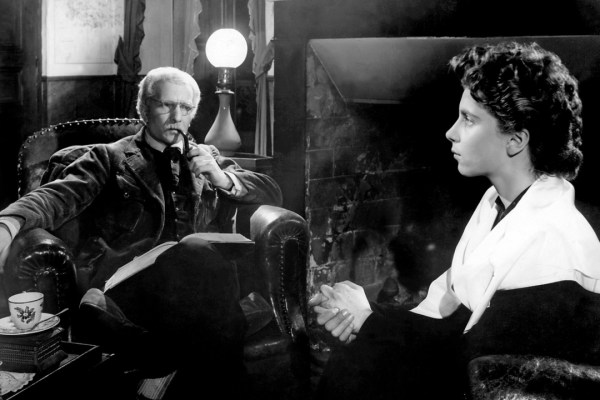
Keiho probes into how the law interprets and calls into question these problems. Enter two psychiatrists, one a veteran, the other his assistant. The latter disagrees with her mentor’s assessment and decides to unravel the mystery within a mystery.
“My assessment of him is different from yours.”
Part courtroom drama, part investigative procedural, Morita makes flashbacks his preferred storytelling mode, but while this serves up some dose of intrigue, the film may feel clunky and unevenly paced at times.
What kept me in it minimally is its exploration of the intersection between psychology and legality. Law is rigourous, blunt and unmoved, whereas psychology is fluid, manipulative and reactive.
Interestingly, both disciplines require a similar measure of skilful interpretation—or manoeuvring—to attack or defend established positions.
Shibata, with his split personality, is in the eye of the storm, and so is the younger psychiatrist with unorthodox methods. This is the true centre of Keiho, but Morita makes it unnecessarily complicated that any resolution, however ambiguous or clear, and whether legal or ‘medical’, loses its intended impact.
Grade: C+
 Eternality Tan