









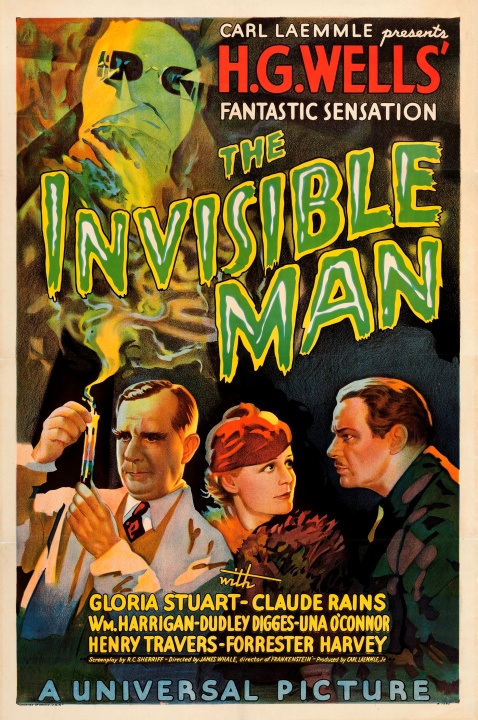
A cult horror classic from early 1930s Hollywood with visual effects work that remains mind-boggling today, as an experiment gone wrong causes an increasingly erratic scientist to become invisible and immensely powerful.
Review #2,878
Dir. James Whale
1933 | USA | Sci-Fi, Horror | 71 min | 1.33:1 | English
Rating exempted – likely to be PG for some frightening scenes
Cast: Claude Rains, Gloria Stuart, William Harrigan
Plot: A scientist finds a way of becoming invisible, but in doing so, he becomes murderously insane.
Awards: Won Special Recommendation (Venice)
Distributor: Universal
Accessibility Index
Subject Matter: Moderate – Invisibility; Terrorising a Community; Insanity
Narrative Style: Straightforward
Pace: Normal
Audience Type: Slightly Mainstream
Viewed: Screener (as part of Perspectives Film Festival)
Spoilers: No
As the saying “old is gold” attests, you have to go back to this 1933 classic for what could be the best Hollywood studio attempt at an ‘invisible man’ movie.
Compared with the voyeuristic and exploitative Hollow Man (2000) by Paul Verhoeven or the latest 2020 refresh starring Elisabeth Moss, the 1930s version might feel ‘tame’.
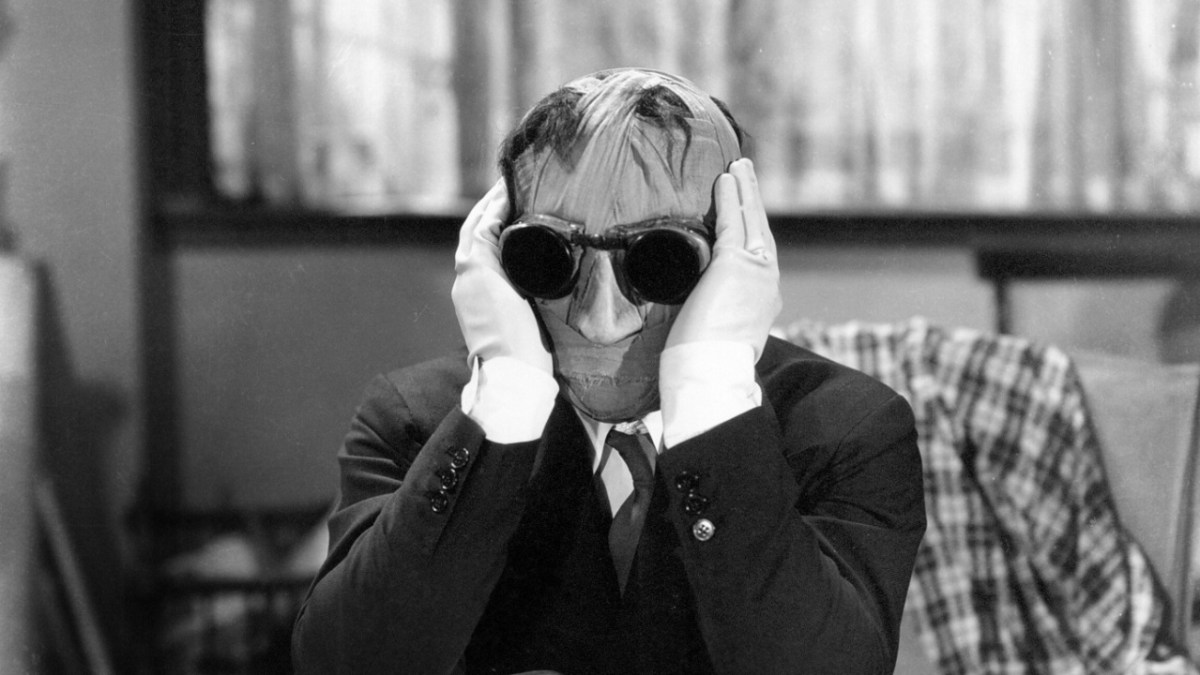
But it is an effective and economical (at only 70-odd minutes) picture that sees the titular ‘monster’ disrupting a small town of shocked and fearful inhabitants when he comes to seek refuge from an experiment gone wrong.
Unfairly reduced to a showcase of what was possible with visual effects at the time, and hence regarded as a curious cult object today, The Invisible Man handles its surprising tonal shifts well, from situational humour (invisibility can create some amusing moments of havoc) to abject terror (say a prayer for the unfortunate souls), eschewing a more romanticised look at an unfortunate character in utter despair.
“The world’s my hiding place.”
Dr. Jack Griffin (Claude Rains in his feature acting debut—yes, he played that French officer in 1942’s Casablanca) relishes being invisible for that gives him the power to force the authorities to cower at his feet.
In some way, his anarchism, or some might even say, terrorism, reveals the radical potential for a new political and social order, though the biggest assumption is that there must only be one invisible man for it to work.
Gloria Stuart (who, believe it or not, played the elder Rose in 1997’s Titanic more than 60 years later) plays the love interest of, well, Jack, though her role is rather underused here.
The visual effects work is still mind-bogglingly good (to think that this was accomplished in the early 1930s) and will thrill cinephiles, especially those into the early innovative days of Classical Hollywood.
The director, James Whale, was on a successful streak of horror films at the time, with Frankenstein (1931) and Bride of Frankenstein (1935) bookending The Invisible Man, all bonafide cult classics of what was then the OG Universal Monsterverse.
Grade: B+
Trailer:
Music:
 Eternality Tan