






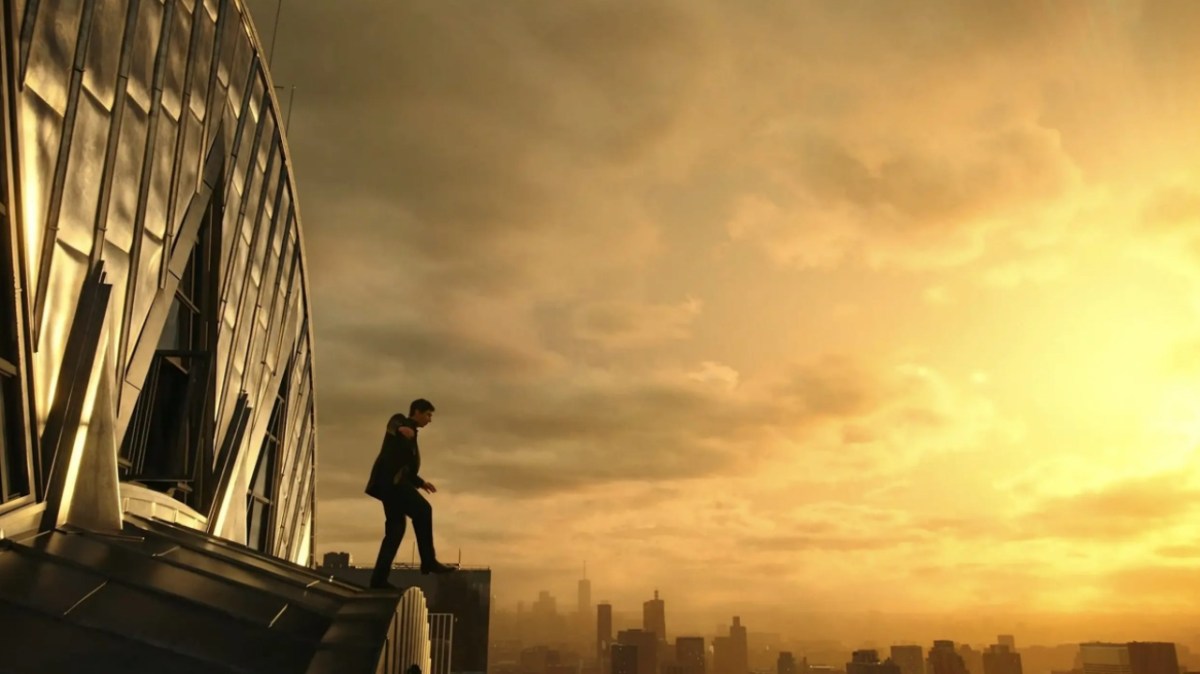
With incredible abandon and ambition, Coppola’s work, infused with Roman allegory, is staggering in terms of craft despite its rather clunky storytelling, as a time-controlling architect hopes to rebuild a new utopian city that is future-looking.
Review #2,869
Dir. Francis Ford Coppola
2024 | USA | Drama, Sci-Fi | 138 min | 2.00:1 | English
R21 (passed clean) for sexual content, nudity, drug use, language and some violence
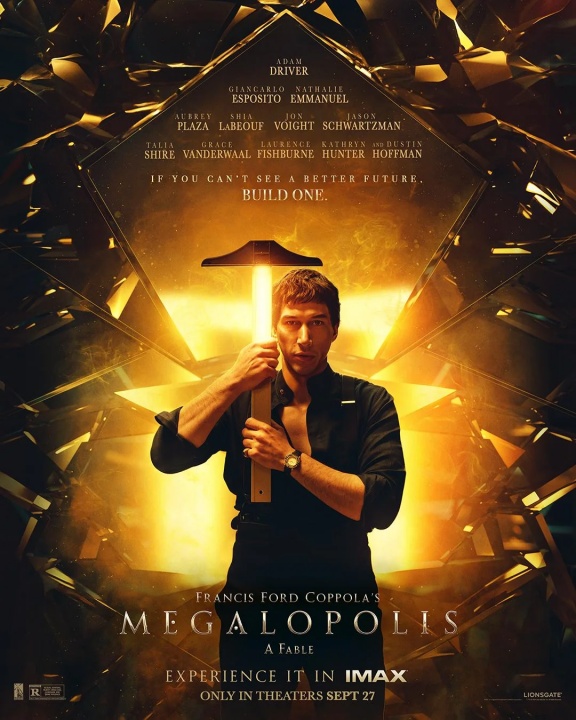
Cast: Adam Driver, Giancarlo Esposito, Nathalie Emmanuel, Aubrey Plaza, Shia LaBeouf, Jon Voight, Laurence Fishburne, Talia Shire, Jason Schwartzman
Plot: The city of New Rome hosts the conflict between Cesar Catilina, a brilliant artist in favor of a utopian future, and the greedy mayor Franklyn Cicero. Between them is Julia Cicero, her loyalty divided between her father and her beloved.
Awards: Nom. for Palme d’Or (Cannes)
International Sales: Goodfellas
Accessibility Index
Subject Matter: Moderate – Time; Creation; Politics & Society
Narrative Style: Slightly Complex
Pace: Normal
Audience Type: Slightly Mainstream
Viewed: In Theatres – Shaw PLQ IMAX
Spoilers: No
You just have to admire the ambition and vision of an 85-year-old director who refuses to back down from making (with his own money) probably the most expensive independent art film ever made but on an epic blockbuster scale.
In what might be Francis Ford Coppola’s final hurrah—a triumphant one for what it’s worth—Megalopolis is staggering in terms of craft, which might do its rather clunky storytelling far more disservice than it deserves.
But please watch it in IMAX (the version I saw came with useful English subtitles) to really see and feel what Coppola is trying to achieve, albeit with one foot in quicksand and the other at the finishing line. It’s that kind of film that seems to reach for the stars but is just one wrong step away from crushing itself with its weight.
This is why we have Adam Driver who plays Cesar, a time-controlling architect pushing to rebuild a new utopian city that is future-looking.
His adversary, Mayor Cicero, wants to keep things status quo, to provide for the present. Julia, the Mayor’s daughter, falls in love with Cesar and is caught between two opposing worldviews.
“When does an empire die?”
Coppola’s film survives all the politicking and didacticism of what our world ‘should’ be, and in fact, has a strong moral message for all of us—that we have it in us to try to change the world for the better. Perhaps a timely piece of advice many would agree with in this age of misinformation, injustice and disparate values.
Megalopolis also intrigues us with its sound design, with Coppola giving us an experience that is unexpectedly psychedelic—and daringly so in a film of this size.
While its stylistic excesses mirror that of Roman hedonism of aeons past, the allegorical narrative shares a similar inquest into the ‘rise and fall’ of empires. However, the film never goes deep thematically even if it tries to intellectualise certain things like ‘power’ and ‘time’ through Cesar’s existential crisis.
While some may find some of the plotting incoherent, particularly in its third act, I would say Coppola has produced something that may be considered rather unique for our time.
The old-school grandeur, the new-age visual effects, the absurdity of it all, and the incredible auteurist abandon. It’s liberating, to say the least, matched only by Aubrey Plaza who bewitches human beings like no other.
Grade: B+
Trailer:
Music:
 Eternality Tan
[…] Production Design: MEGALOPOLIS. So much hate for Coppola’s work but this was ‘The Brutalist’ on steroids and […]
LikeLike