

Lee Chang-dong’s Cannes Best Screenplay winner teaches us to be at peace with ourselves no matter how dark things might become, as an old lady suffering from the onset of Alzheimer’s turns to poetry writing for psychological comfort.

Review #641
Dir. Lee Chang-dong
2010 | South Korea | Drama | 139 min | 1.85:1 | Korean
NC16 (passed clean) for some sexual content
Cast: Yun Jeong-hie, Lee Da-wit, Kim Hira
Plot: A sixty-something woman, faced with the discovery of a heinous family crime and in the early stages of Alzheimer’s disease, finds strength and purpose when she enrolls in a poetry class.
Awards: Won Best Screenplay and Nom. for Palme d’Or (Cannes)
International Sales: Finecut
Accessibility Index
Subject Matter: Moderate – Onset of Alzheimer’s Disease; Writing Poetry; Crime & Morality
Narrative Style: Slightly Complex
Pace: Slightly Slow
Audience Type: Slightly Arthouse
Viewed: Alliance Francaise (as part of Lee Chang-dong Retrospective)
First Published: 21 Jul 2011
Spoilers: No
Poetry, the latest by Korean auteur Lee Chang-dong, is a terrific film. It is not his best effort, but it remains emotionally resonating, while at the same time exploring themes of identity, the contemplation of life as a mysterious puzzle of suffering and joy, and learning to find the true path to our inner soul.
Ultimately, it is a film that teaches us to be at peace with ourselves no matter how things turn out, no matter how situations unfold, while drawing parallels to the art of learning poetry.
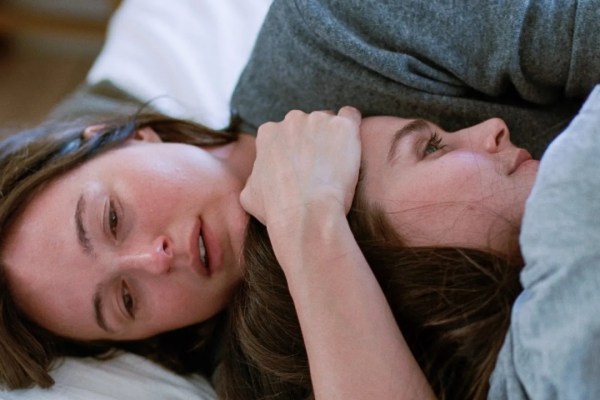
As you will see, Mija (Yun Jeong-hie), the lead character in Poetry takes up a class in poetry. She is an old grandmother who takes care of her irresponsible grandson Jong-wook (Lee Da-wit) and lives in a small apartment.
She shows symptoms of Alzheimer’s disease but continues to look forward to life with a notepad in hand, recording her observations of nature in a bid to write a poem by the end of her poetry course.
She works part-time as a caregiver to a quite wealthy old man half-paralyzed by a stroke and gets some financial support from the government.
“If you have the feeling, you can write poetry.”
Lee’s film unfolds with natural ease. Beginning with a prologue that foreshadows troubled times ahead, Poetry slowly but steadily immerses us into the world of Mija, which is, by anyone’s standards, a mundane one. Yun’s performance is exceptional and we are inclined to vouch for her.
But when a key plot information is revealed in the second act, Mija is hit hard by the circumstances of reality. We feel sad for her character yet we discover that she is not intending to seek solace but to find inner strength through poetry.
Can poetry be learnt? Mija’s teacher tells her that the answer lies within oneself. Lee, who won Best Screenplay at Cannes for his outstanding work here, delivers a lyrical ode to the beauty of life and poignantly juxtaposes it with its ugliness. What is beauty if there is no ugliness? What is fairness if there is no justice?
Poetry explores the ambiguity of moral and ethical decisions that we make in our lives, and true to the ancient art of poem-writing, we see that it is our inner self that guides us to these decisions. Lee beautifully translates this onto the screen without a whiff of manipulative sentimentality.
Grade: A-
Trailer:
 Eternality Tan
[…] to see his first feature for a long time, ever since I chanced upon what was then his latest film, Poetry (2010) at a retrospective. Described by many as a neo-noir, Green Fish remains to be Lee’s most […]
LikeLike
[…] Peppermint Candy, released before the turn of the century, may be Lee Chang-dong’s sophomore feature, but I think it is by a mile the master’s finest film to date, and that’s saying something about his remarkable if brief body of work that includes the likes of Oasis (2002), Secret Sunshine (2007) and Poetry (2010). […]
LikeLike
Great reviews as always. I have not heard of this movie before, but your review has definitely compelled me to check it out. Alzheimer’s is a devastating disease which is rarely depicted accurately in movies. Films that capture this mental condition aren’t always easy to watch. That being said, such movies can often be really powerful. For instance, “Poetry” reminds me a lot of “The Father”. Florian Zeller’s Oscar-winning film told a disturbing story of an elderly senior battling the condition of Dementia. I absolutely loved that movie which managed to capture the devastating disease. So, I will definitely keep “Poetry” on my watchlist of movies to see. Thanks for the recommendation.
Here’s my thoughts on “The Father”:
LikeLike
[…] Lee Chang-dong, my favourite South Korean director and arguably the country’s finest working filmmaker, returns with another hypnotic gem, eight years after the 2010 Cannes Best Screenplay winner, Poetry. […]
LikeLike