







A donkey becomes both a gift and a nuisance in an Indian village, as this stirring Tamil film makes pointed observations about the irrational anxieties and delusions of the religiously reliant.

Review #2,799
Dir. John Abraham
1977 | India | Drama | 90 min | 1.85:1 | Tamil & English
PG13 (passed clean) for scenes of intimacy
Cast: M.B. Sreenivasan, Swathi, S. Gopal
Plot: A high-caste Brahmin college professor adopts a newborn donkey when its mother is killed, and brings it to his village, against the norms of his community.
Awards: –
Source: National Film Archive of India
Accessibility Index
Subject Matter: Moderate – Rural Village; Traditions & Customs
Narrative Style: Straightforward
Pace: Slightly Slow
Audience Type: Slightly Arthouse
Viewed: Oldham Theatre (as part of Asian Film Archive’s ‘Parallels’ programme)
Spoilers: No
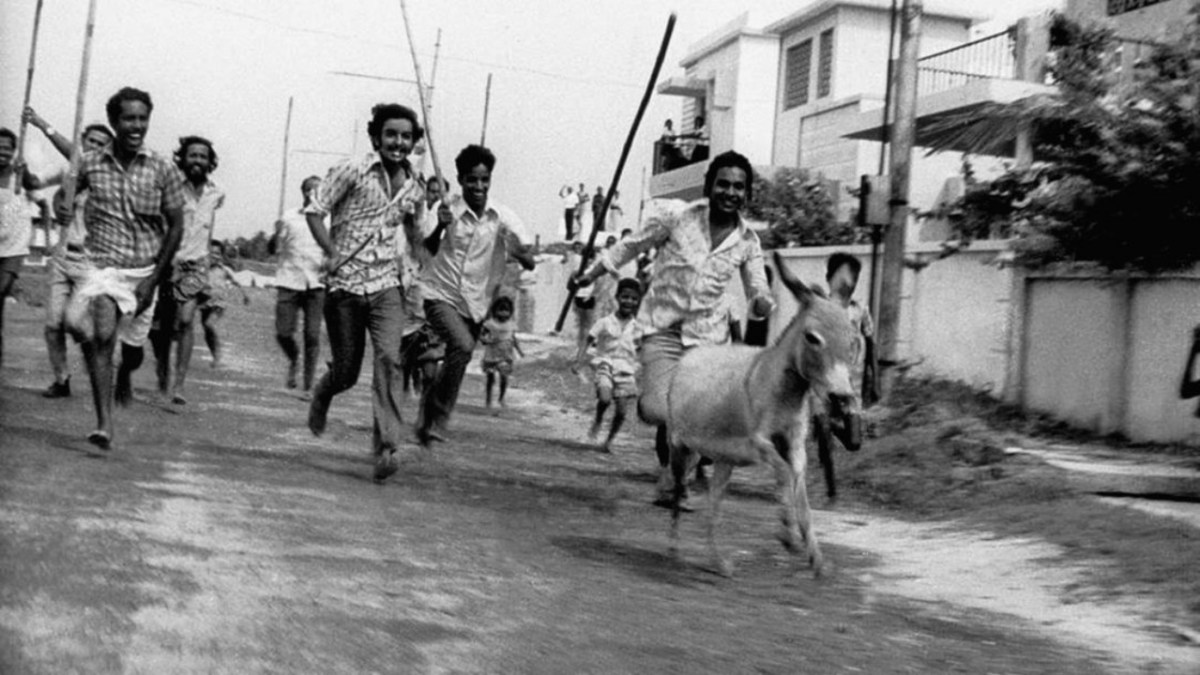
The only Tamil film made by John Abraham, who dabbled in Malayalam cinema in the handful of features he made in the ‘70s and ‘80s, Donkey in a Brahmin Village is a work of stirring fervour as an unmarried college professor who out of sympathy takes in a lost donkey at his doorstep one day.
Ostracised by the townsfolks for living with the animal, the professor brings it to a village where his parents reside. In hopes of finding a more natural environment for the donkey to live in, he places it under the care of a mute girl.
But as the title suggests, this is a village dominated by the upper-caste Brahmins, particularly the priests who engage in daily religious rituals and enforce views as to what might be holy or evil.
Certainly, the unfortunate donkey (albeit let loose many times by mischievous village teenagers) is ripe for karmic judgment when it is made to ‘interrupt’ prayer sessions or becomes a harbinger of bad omens.
So, the animal’s fate lies in the hands of these religious men, with the director making some pointed observations on the irrational anxieties and delusions of these villagers.
“People will laugh at him.”
One can tell that Abraham loves his zoom-ins and outs, which are so prevalent and conspicuous that it becomes quite amusing to see (well, at least to me, especially when he zooms into something random like a wall or plant before cutting to the next shot).
Many have likened Donkey in a Brahmin Village to Bresson’s iconic Au hasard Balthazar (1966), also about a donkey who nobly accepts its fate.
While the animal in Bresson’s film naturally assumes a Christ-like figure, in the cultural and religious context of Abraham’s work, such beasts may be thought of as possessing more elusive and phantasmagorical qualities.
So, the age-old rituals and never-ending cycles of beliefs must continue to explain certain phenomena, often without any desire for rationalism.
Grade: B+
Trailer:
 Eternality Tan
A great review. I haven’t watched any Tamil movies, but your review has given me a strong reason to check this one out. I have always been a fan of Bollywood Cinema. I grew up watching Indian movies so I’m quite familiar with the country’s culture. The focus on caste systems in this movie reminds me a lot of “The White Tiger”. Ramin Bahrani’s film examined the gap between the rich and poor in Indian society. It’s far different in tone from the film you reviewed but covers similar themes of social class in India. Here’s why I loved it:
LikeLike