





A Trans-Siberian train journey turns into a ‘Trans-Mongolian’ detour on the steppes as a group of Westerners find themselves ‘enjoying’ the hospitality of a Mongolian Princess and her people, in an oddly-structured but exuberant work that challenges exoticist assumptions in East-West cultural discourse.

Review #2,792
Dir. Ulrike Ottinger
1989 | West Germany, France | Drama | 165 min | 1.85:1 | German, French, Russian & Mongolian
PG13 (passed clean) for some disturbing scenes
Cast: Delphine Seyrig, Irm Hermann, Peter Kern, Gillian Scalici, Ines Sastre, Xu Re Huar, Nugzar Sharia
Plot: A group of cosmopolitan women passengers aboard the Trans-Siberian Railway encounter Ulan Iga, a Mongolian warrior princess.
Awards: Nom. for Golden Bear (Berlinale)
Source: Arsenal – Institute for Film & Video
Accessibility Index
Subject Matter: Moderate – East-West Cultural Flows; New Experiences
Narrative Style: Slightly Complex
Pace: Slightly Slow
Audience Type: General Arthouse
Viewed: Screener (as part of Asian Film Archive’s regular ‘Restored’ programme)
Spoilers: No
One of the reasons I love cinema so much is because of chancing upon films like this.
An eye-opening discovery in many ways, Johanna d’Arc of Mongolia is the first time I’ve heard of director Ulrike Ottinger, who I now learn is a remarkable German director whose penchant for challenging aesthetic and narrative norms has over five decades coalesced in a body of work that continues to traverse genres, mediums and geography. She turns 82 this year.
In a bold curatorial decision by the Asian Film Archive, Johanna d’Arc of Mongolia is made available on the big screen in Singapore in a 2K restoration. A film that easily situates itself within East-West discourse on cultural flows, Ottinger’s work can be described by its odd structure of two ‘asymmetrical halves’.
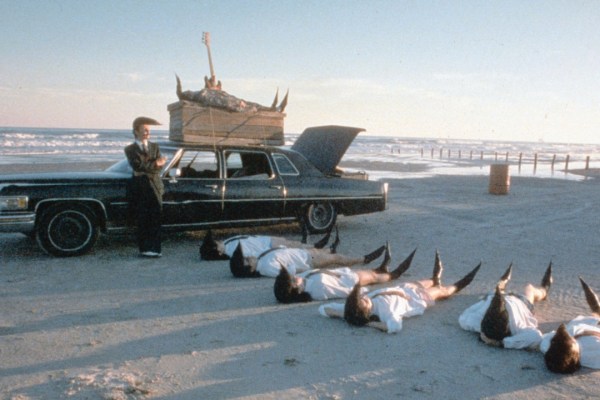
We first find ourselves on the Trans-Siberian Express, where we encounter a disparate but certainly not dispirited bunch of high-society Westerners, some of whom would break into song-and-dance as they dine and wax lyrical about their personal and professional exploits.
“We ambushed you out of necessity.”
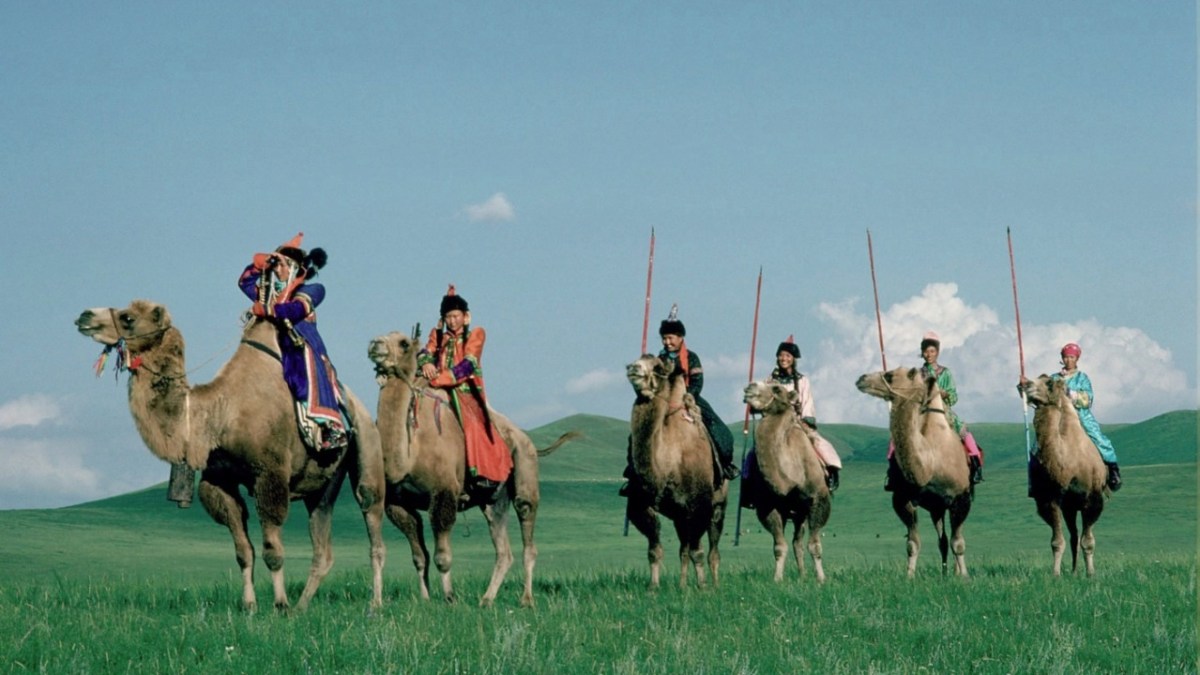
Tensions rise when their train is stopped by bandits and they have to seek refuge. In comes Princess Ulan Iga and her Mongolian fighters, whom the Westerners would spend the rest of the film with. This latter ‘Trans-Mongolian’ half goes deep into ethnographic territory as Ottinger takes pains to show us the lives of these nomads.
Shots of them moving their gers (the iconic circular portable houses) across large swathes of land are stunning, and so are shots of women on galloping horses that would look right at home in a Kurosawa chanbara jidai-geki (swordfighting period drama).
Exuberant and energetic at times as traditional rituals are performed, but also deliberate in its pacing that contributes considerably to its rather lengthy runtime, Johanna d’Arc of Mongolia is attentive in its depiction—and more remarkably, subversion—of orientalist tropes.
Its exoticist assumption is challenged head-on through its embracement of the marginalised, conferring more power to them, including scenes that seem to suggest a queer reading. There is still much to take in but I’m glad to have been able to see this.
Grade: B+
 Eternality Tan