








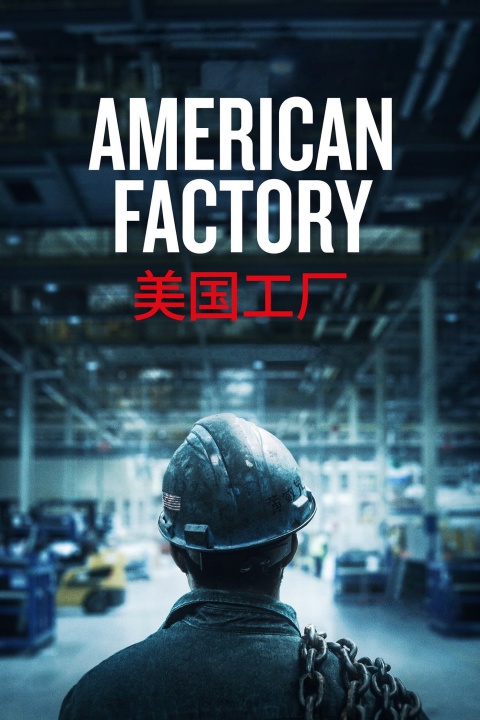
A Chinese conglomerate sets up shop in a vacant factory plant in Ohio, transforming livelihoods but also creating cultural and social tensions in this well-made if not particularly memorable Oscar-winning documentary.
Review #2,779
Dir. Steven Bognar & Julia Reichert
2019 | USA | Documentary | 110 min | 1.85:1 | English & Mandarin
NC16 (passed clean) for some coarse language
Cast: –
Plot: In post-industrial Ohio, a Chinese billionaire opens a factory in an abandoned General Motors plant, hiring two thousand Americans. Early days of hope and optimism give way to setbacks as high-tech China clashes with working-class America.
Awards: Won Best Documentary Feature (Oscars); Won Directing Award – Documentary (Sundance)
Distributor: Netflix
Accessibility Index
Subject Matter: Moderate – Corporate America; Cultural Differences; Chinese Business Development
Narrative Style: Straightforward
Pace: Slightly Slow
Audience Type: Slightly Mainstream
Viewed: Netflix
Spoilers: No
With US-China relations not exactly defrosting anytime soon, watching the Oscar-winning American Factory which is about an American-Chinese business partnership, feels like an anomaly, made at a time when Covid has yet to rear its ugly head.
Many factories were shuttered and many lost jobs during the pandemic. American Factory is also, though in another context, about the shuttering of factories, specifically the closure of a General Motors plant in Ohio.
However, years later, the space is given a new lease of life when a Chinese conglomerate enters the picture with a huge investment in hand.
As much as American Factory is a tantalising example of the promise of deep cooperation and collaboration between two different cultures, it is also about the people on the ground—the blue-collar American workers as well as those from China who have decided to work in the US.
“There must be flaws if the glass exploded.”
Producing reliable industrial glass for clients, the factory in question must also face an ideological reckoning—aggrieved American workers who want to unionise to protect their rights, something that is utterly unheard of from a Chinese perspective. So, both sides must strategise and play the long game of influence.
The documentary alternates between the US and China—some of the most amusing parts come from a work visit by several American managers to a similar plant in the Mainland, who are left quietly shocked at how ‘well-drilled’ the Chinese workers are.
While the subject matter is interesting for audiences who are into cross-cultural milieus, as a documentary, American Factory doesn’t particularly stand out, especially in a year with the much more deserving For Sama, the galvanising political piece The Edge of Democracy and the hypnotic naturalism of Honeyland. It is well-made in a functional, matter-of-fact way, but not especially memorable in its filmmaking.
Grade: B
Trailer:
Music:
 Eternality Tan