

Diop’s well-intentioned documentary centering on people living in the Parisian suburbs is surprisingly monotonous, unstimulating, and goes on for far too long.
Review #2,745
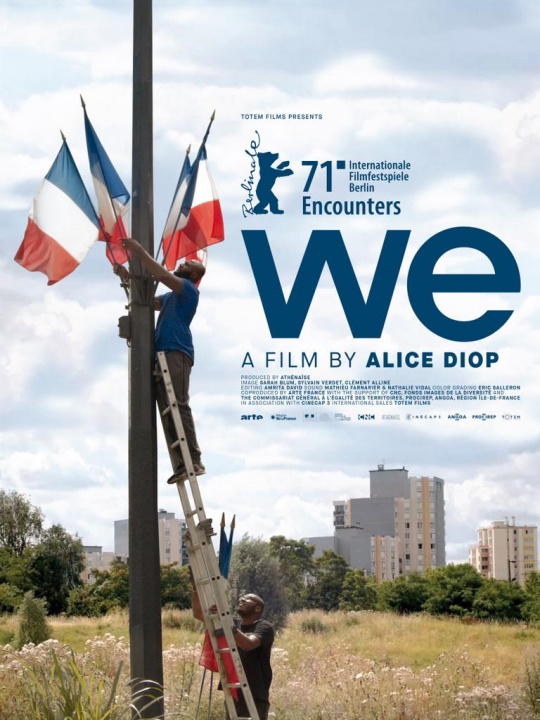
Dir. Alice Diop
2021 | France | Documentary | 115 min | 1.85:1 | French
Not rated – likely to be PG
Cast: –
Plot: A kaleidoscopic portrait of people from the Parisian suburbs, their lives and work connected by the RER B commuter train that cuts through the city from north to south. A migrant mechanic, a care worker for the elderly, a writer, and the director herself, all make up the “we” of the title.
Awards: Won Encounters Award (Berlinale)
International Sales: Totem Films
Accessibility Index
Subject Matter: Moderate – Community; People; Immigrants
Narrative Style: Straightforward
Pace: Slightly Slow
Audience Type: Slightly Arthouse
Viewed: MUBI
Spoilers: No
Made in between On Call (2016), a terrific documentary about a clinic in the Parisian suburbs that caters to immigrants, and Saint Omer (2022), a legal drama about the trial of a black woman accused of killing her baby, We is surprisingly lacklustre and unstimulating considering that its director, Alice Diop, is one of the more interesting voices to have emerged in French cinema in recent years.
It is a disappointment, to say the least, and makes Gianfranco Rosi’s Sacro GRA (2013) seem a much more tolerable film in retrospect.
Both films share an affinity for the people living on the outskirts of a major city—while Rosi’s Venice Golden Lion-winning work centers on a humongous ring road in Rome, Diop chooses to look at an urban train link (the RER B) that connects North to South Paris.
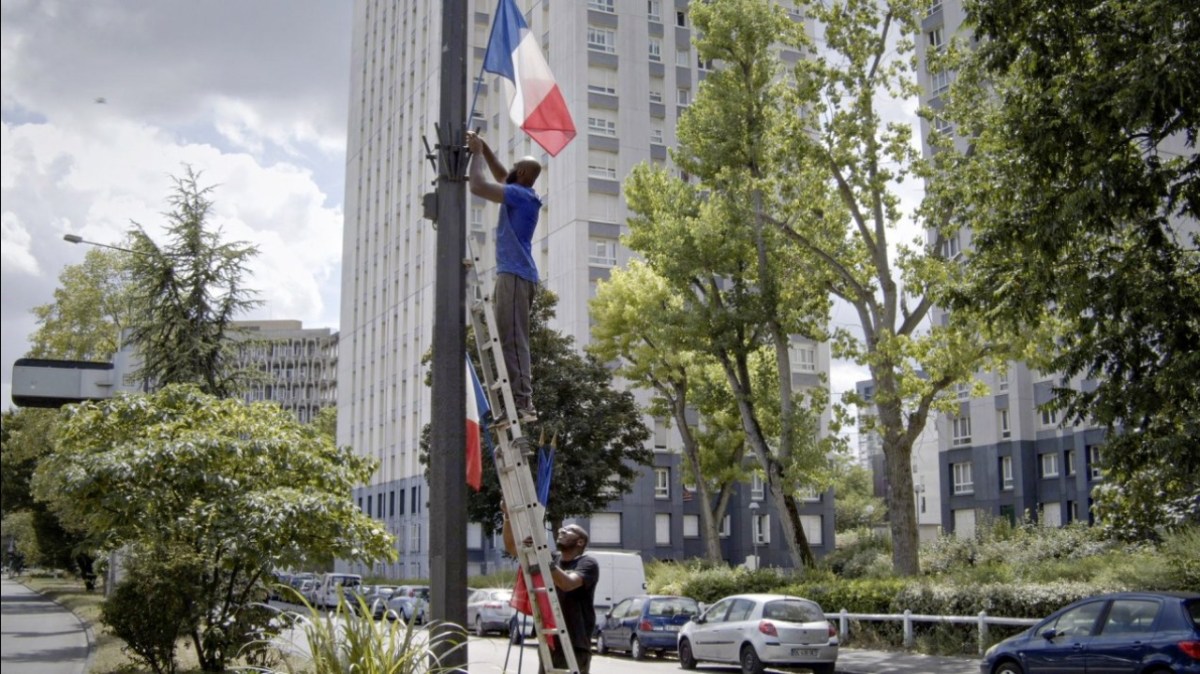
We is a well-intentioned work that captures in various vignettes the lives of ordinary people, including a Malian migrant who works as a car mechanic, and even Diop’s sister, a community care worker who does regular house calls to the elderly.
“You only know what they’re like once you’re here.”
Parts of We also centers on the director herself as she inserts footage of old family videos. The glaring problem, however, is the assumption that whatever is personal is interesting to others, or that the lives of these subjects are compelling in and of themselves.
Some might point to the tenderness and compassion that Diop has given to the predominantly Black and immigrant communities, and thus giving voice to the unnoticed in society, but her filmmaking, in this case, feels conspicuous in its monotony.
Worse, this is at best an 80–90-minute film that goes on for nearly two hours. These kinds of films have been done with far greater charisma and effect—look no further than, say, Agnes Varda and JR’s Faces Places (2017) as an exemplar.
Grade: C
Trailer:
 Eternality Tan
[…] We (2021) […]
LikeLike