







Shot in Congo with Jean-Pierre Leaud, Rocha’s avant-garde attack on Western imperialism on African soil may feel didactic at times, but it is fierce and uncompromising in its message of political self-determination.
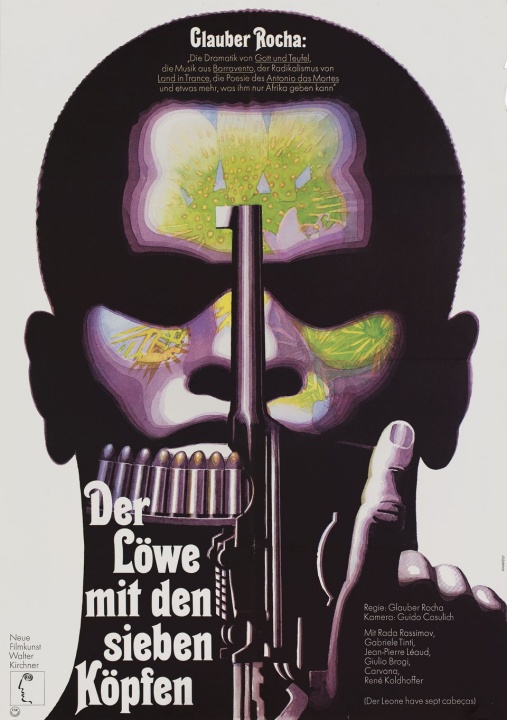
Review #2,599
Dir. Glauber Rocha
1970 | Brazil/Congo | Drama/Experimental | 99 min | 1.66:1 | Portuguese, French, German & English
Not rated – likely to be M18 for violence, sexual scene and nudity
Cast: Rada Rassimov, Giulio Brogi, Gabriele Tinti, Jean-Pierre Leaud, Aldo Bixio
Plot: A white-robed preacher wanders and sermonizes across African lands; European communists and CIA spies conspire out of mutual self-interest to engineer the appointment of an African bourgeois to a puppet government presidency; and a revolutionary group marches in exile.
Awards: Official Selection (Venice)
Distributor: –
Accessibility Index
Subject Matter: Moderate – Political Struggle & Self Determination; Western Imperialism
Narrative Style: Slightly Complex/Elliptical
Pace: Slightly Slow
Audience Type: Niche Arthouse
Viewed: MUBI
Spoilers: No
Even by Brazilian director Glauber Rocha’s standards, this seems quite out of the blue. Rocha, who was best known for films like Black God, White Devil (1964) and Entranced Earth (1967), which were key works of the Cinema Novo movement, was no stranger to making films that were considered ‘revolutionary’ from a political perspective.
With The Lion Has Seven Faces, apparently made when he was in exile, he drew creative inspiration in the exotic setting of Africa.
Working with French New Wave star Jean-Pierre Leaud, Rocha found the rebellious energy required to mount an anti-imperialist screen attack on Western barbarism against the natives.
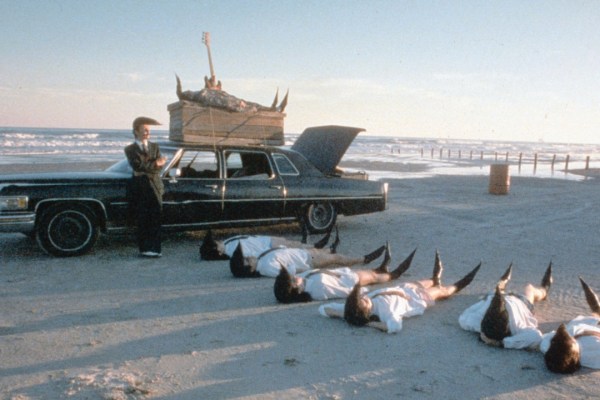
Leaud plays a preacher who warns of the apocalypse after capturing someone whom he deems a messenger for the devil. Little does he know that this person is instead a Latin American revolutionary hoping to support the local cause for liberation. There are other characters, some pro-West, others resisting power and control—everyone’s fighting for something.
“We and our gods have been fighting over 300 years against the white people who annihilate us with such unprecedented barbarism.”
The Lion Has Seven Faces is made in a style that has more affinity with avant-garde cinema than traditional forms of storytelling; as such, it may only interest niche audiences who could wade through the didacticism of ideological bickering, fourth-wall-breaking characters and staged proclamations of liberation and oppression.
Having said that, Rocha’s work somehow feels authentic—perhaps because it was shot in the heart of Congo, where the beautiful natural landscapes and faces of the locals become markers of ‘documentary realism’.
The Lion Has Seven Faces might not always be engrossing, but it is fierce and uncompromising in its message of political self-determination, one that is free from the poison of the West.
Grade: B
 Eternality Tan
[…] engagement with cinema ever further with Entranced Earth (1967) and the even more radical The Lion Has Seven Heads […]
LikeLike