






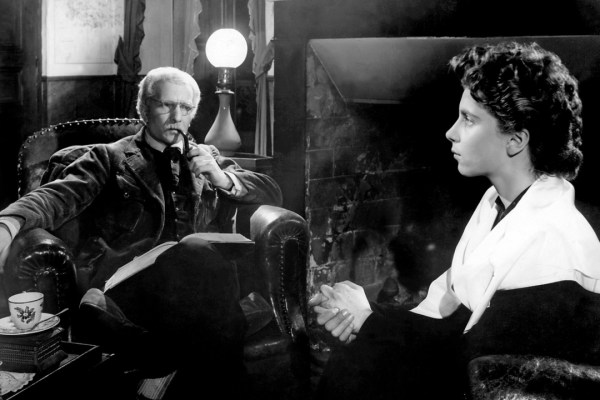
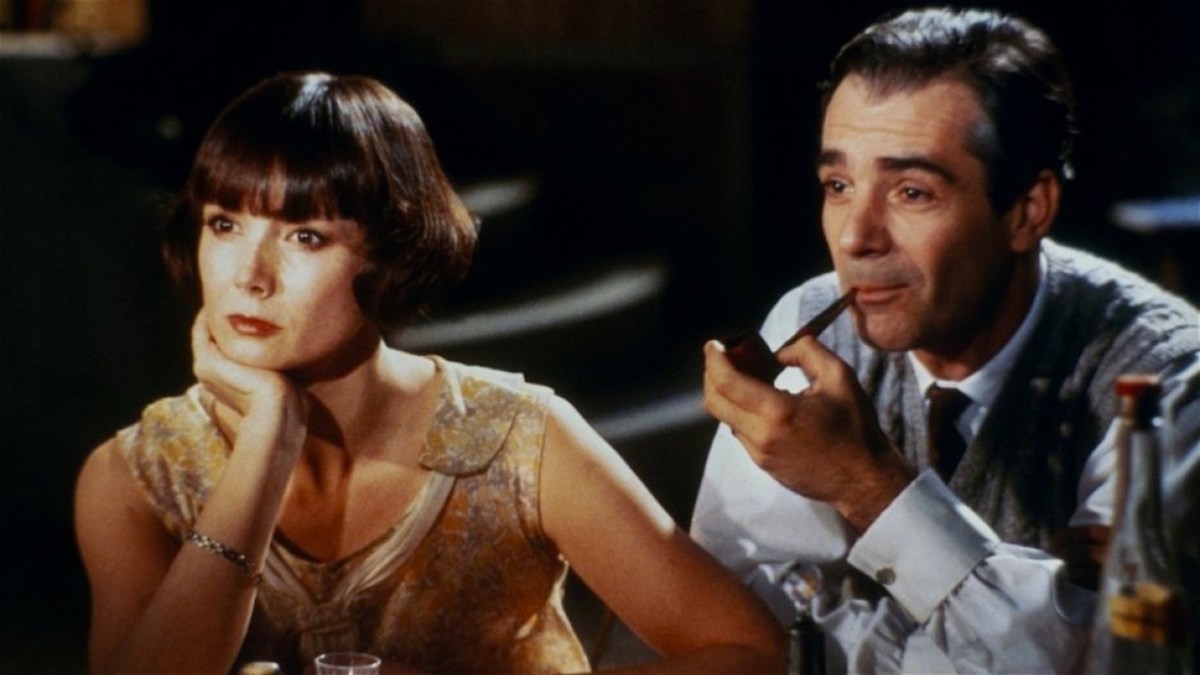
Resnais blurs the lines between theatre and cinema in this mature treatise on the ‘love triangle’, marked by a trio of outstanding performances.

Dir. Alain Resnais
1986 | France | Drama/Romance | 112 mins | 1.66:1 | French
PG (passed clean) for some mature themes
Cast: Andre Dussollier, Pierre Arditi, Sabine Azema, Fanny Ardant
Plot: In the 1920s, Marcel, a celebrated concert violinist, is visiting Pierre, an old friend, and his high-spirited wife Romaine. After dinner, Marcel recounts a personal story of love and betrayal that moves Romaine deeply. So begins a passionate affair that will ultimately tear all their lives apart.
Awards: Official Selection (Venice)
Source: MK2
Accessibility Index
Subject Matter: Moderate – Relationships
Narrative Style: Straightforward
Pace: Slightly Slow
Audience Type: Slightly Arthouse
Viewed: MUBI
Spoilers: No
After the disappointing Life Is a Bed of Roses (1983), Alain Resnais’ follow-up, Melo (or ‘Melodrama’), saw him back in form with a stripped-down, ‘theatrical’ effort with a strong focus on performance.
With the opening credits innovatively communicated via a hand flipping the pages of a programme booklet, and transitions between the three main ‘acts’ through insertions of images of a red stage curtain, one might find Resnais’ attempt at exploring artifice here much more focused than his previous film.
In Melo, which is a mature treatise on the ‘love triangle’ story, he locates the burden of emotions in his actors’ performances. Pierre Arditi, Andre Dussollier and Sabine Azema are outstanding, both individually and collectively, as Pierre, Marcel and Romaine respectively.
In the first act, which is the only time the trio are together and in a relaxed mood, Marcel visits his good friend Pierre and his wife Romaine as they hold an intimate celebration after Marcel’s successful concert.
They are all musicians who respect each other, but after that very night of food and drinks, Romaine begins to fall in love with Marcel after he shares an enigmatic story with the couple.
Acts Two and Three are far more miserable in tone, with the spectre of sickness—both physical and psychological—as well as the considerable burden of guilt and regret filling the heavy silences.
Melo blurs the lines between theatre and cinema, and perhaps even that of ‘making music’ and ‘making love’. There is nothing explicitly sexual about Resnais’ work, but some of the film’s more poetic moments centre on the characters playing music together—and always no more intimate than a duet.
A pet peeve though: Resnais tended to cut away quickly whenever diegetic music was being performed—to let audiences imagine the intimate encounter I would assume—but for music lovers like myself, it can get rather annoying.
Grade: A-
Trailer:
Music:
 Eternality Tan